Reason # 54: Like Father, Like Son

(In reply to Husain Qutbuddin’s Youtube video)

Since the nass upon Syedna Mufaddal Saifuddin TUS is valid, confirmed, witnessed, and attested to, the claims made by Khuzaima and his children, their numerous web pages and hours of YouTube banter all seem to be stepping aside from the actual truth, that one doesn’t just assume the position of Da’i, it is conferred by a predecessor – Dai ul Haq. All the facts they have purported and displayed seem to be the result of years of confusion due to their absence from the hadrat imamiyah of Syedna Mohammed Burhanuddin RA. Therefore, their attempts to convince people resemble ploys and techniques of convoluted persuasion, which is usually not the necessary tool for establishing haq, which is clear and evident. Nonetheless, I will highlight the weaknesses of their arguments.

Husain’s deceptive methods evident throughout his videos include:

  • Taking statements and narrations out of context and manipulating them for his own need and thus feeding his political agenda;
  • Relying on hearsay as evidence, rather than verifiable facts and testimonies;
  • Using examples from history that have nothing to do with the current situation and are deliberately applied out of context.
  • Being over simplistic and illogical, i.e. using irrelevant premises and introductions to arrive at incorrect conclusions

Therefore, almost everything he has said can be dismissed, not because there is an unwillingness on our part to listen or a lack of intelligence; rather, because reason does not award any  merit to his comments or support to his arguments. In fact, it is our intellectual capacity, given to us by Allah Ta’ala, and strengthened through the tawfeeq we receive from his Dai al-Zaman, Syedna Mufaddal SaifuddinTUS , that we are able to see through his verbose arguments.

 For those who visit this site regularly and are familiar with even the most basic information provided here, which have been validated and supported from the bayaans of Syedna Mohammed Burhanuddin RA and Dawat na kitabo, it is obvious that apart from baseless allegations, Husain, the son of Khuzaima, has not offered anything of real substance in his approximately two hour video sessions. All of the issues he mentions have previously been addressed by this site. However, Khuzaima Qutbuddin and his children are now resorting to repetitive arguments and obscuring the core issue of nass which has become the basis of their flawed call, which is made all the more intolerable by constant overlap and repetition within his videos.

Reason # 53: We Hear Your Call

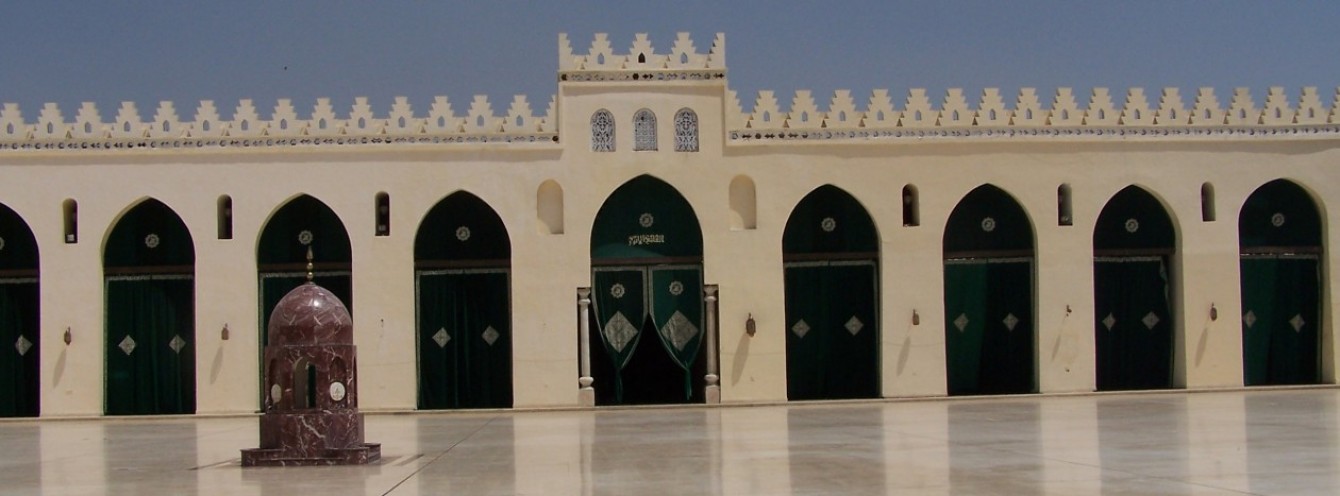
Burhanuddin Moula al-Hayy al-Muqaddas RA and Syedna Mufaddal Saifuddin  Moula TUS - Jami' Juyushi Cairo

Burhanuddin Moula al-Hayy al-Muqaddas RA and Syedna Mufaddal Saifuddin Moula TUS – Jami’ Juyushi Cairo


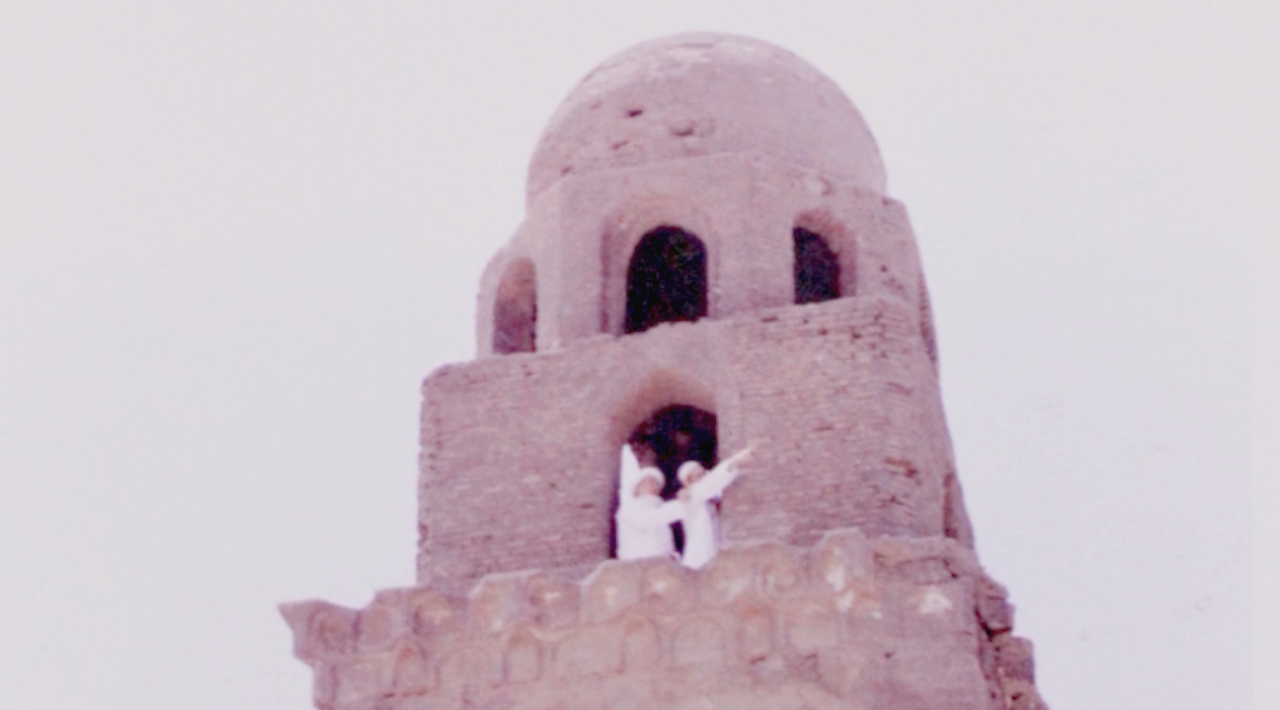
Syedna Mufaddal Saifuddin reciting Azaan in Jame' al Anwar

Syedna Mufaddal Saifuddin reciting Azaan in Jame’ al Anwar

In the dust of Kerbala, amongst those seventy two brethren, lies the one who heard the call to freedom when others turned a deaf ear. His mother aptly named him ‘Hurr’ – the one who is free. He heard the ‘azaan’ of the grandson of the one who had first called humanity to Islam. Freedom lies in being bold. When Hurr heard Imam Hussain’s call, he had to dig deep, and face the inner turmoil of facing the choice of two distinct possibilities – hell or heaven. That moment of rewriting his destiny must have been full of trepidation, as despite being a mighty warrior, he trembled like a leaf caught in a powerful gust of wind. However, his courage gave him the strength to hear and respond to the call of the Moula that offered salvation. The moment he spurred his steed towards Imam Hussain and lay his head at the feet of Moula, he was liberated.

Our entire lives we have heard the voice of Syedna Mohammed Burhanuddin. He spoke to us in a language only those with heart could hear. He spoke to us when we were near, at his feet, with that benevolent gaze that communicated without words. He spoke to us when we were far, in our hearts, with his dua that traversed the length and breadth of the globe. So when the news of that day came, our ears, accustomed to his soothing voice and comforting call, could not hear what was too painful to hear. It was the deafening blow of fate, the shock of which will ring in our ears for all our lives.

In our lives he called to us. At times it was “Aawo, aawo, maaru haath thaami lo!” and at times it was “Aawo, aawo, maara saathe Hussain par roi lo! Roi lo!”.  In a post-Englightenment world, haggling over conflicting notions of liberty and what it means to be ‘free’, Moula showed us that true freedom lay in surrendering mind, body and soul to Moula – through free will and reasoned choice, not through blind faith. Hurr heard the call of Moula, internally reflected, contemplated through reasonable thinking and came to a conclusion born out of his free will. No one coerced him. It was his choice and his alone.

We heard Moula then and we hear him today. That voice is silent now, but we hear his call loud and clear. His son, his rightful heir, Syedna Mufaddal Saifuddin speaks to us in the language of Burhanuddin Moula. His every breath, every salaami, every gesture, every gaze – is a call which resonates throughout the world. And we hear it.

Imam Sadiq once said “Call to us silently. Be our silent Duat……beckon others through your actions”.  Moula’s silent call, through the familiar look and walk of Burhanuddin Moula, is heard by mumineen. For those who are hard of hearing, Moula articulated his call through words filled with compassion and concern, but alas that call fell on deaf ears.

For our brethren who have lost their way, do not be afraid. The secret of freedom is courage. We are who we are by our responses to everything in life. The parable of Kerbala is not just about the number of those with Hussain, but more importantly about their stalwart courage in the face of unimaginable odds. Just like Hurr, every age sees those who are destined for greatness, facing a choice. That choice will ultimately decide whether we are enslaved by ideological misconceptions of liberty and freedom, where “reasonable thinking, logic, science” reign unchecked and unbalanced without faith – OR – we are liberated from all the confines of this existence and become free here and in the hereafter. There is a choice, a very clear one. There is still a chance. Imam Hussain did not turn away from Hurr when he came. In the space of a few hours, Imam Hussain undid the sins of a lifetime and transformed the fortunes of Hurr. Join us, without fear of bycott or rejection. We are one.

Moula! We hear your call, and by virtue of reason and faith in tandem, we say “Labbaik!”. We are here, before you and at your side. We will follow you to the ends of the earth and back. There are those who will do anything to muffle and mute your call, but your voice will always resonate within us.

As long as the ‘mu’ezzin’ calls out five times a day, may you always remain the voice of Burhanuddin Moula.

Reason # 52: The Nass Mubarak of Syedna Mohammed Burhanuddin al-Hayy al-Muqaddas RA

Surah 6, Ayat 7

Surah 6, Ayat 7

[6:7]
But even if We had sent down unto thee [O Prophet] a writing on paper, and they had touched it with their own hands – those who are bent on denying the truth would indeed have said, “This is clearly nothing but a deception!”

This video is posted with all rights reserved by the blogger. Any distribution of this film is strictly prohibited without written permission and authorization from the blogger herself.

Reason # 51: Syedna Taher Saifuddin RA and the Title “Aali Qadr Mufaddal”

Khuzaima Qutbuddin and his children have claimed that the conferment of titles and honorifics bestowed upon him by Syedna Taher Saifuddin RA and Syedna Mohammed Burhanuddin RA are indications of his alleged nass. However, as it has become clearly evident, these honors were in no ways unique to him; rather, they are, if not common, at least shared among many other Shehzadas in the Qasre Aali (see reasons # 46 and 49). More importantly, no matter the number of titles or instances of perceived ‘indications’ and alleged ‘signs’ one claims to their favor, they are irrelevant and meaningless without a formal nass in the presence of witnesses. This is clearly established in Dawat texts in various places and is the manner by which Syedna Mohammed Burhanuddin RA conferred nass upon Syedna Mufaddal Saifuddin TUS repeatedly.

It is because of his true maqaam as mansoos that the hundreds of signs and indications that indicate his stature are meaningful and relevant. Syedna Aali Qadr Mufaddal Saifuddin’s TUS very name is the most obvious indication of his maqaam. His naam mubarak was given by his grandfather Syedna Taher Saifuddin RA. When Syedna Saifuddin TUS was born, Syedna Mohammed Burhanuddin RA went to his father’s hadrat imamiyah and sought a name for his child. Syedna Taher Saifuddin RA asked him what name he would like to have and Syedna Burhanuddin RA responded that whichever name Moula RA graciously gave. At that time, Syedna Taher Saifuddin RA wrote the name ‘Aali Qadr Mufaddal’ on a piece of a paper. Underneath the name was its numerical significance, according to the arabic alphabet numerical value system (the abjad system).  The  ´adad (sum) of ‘Aali Qadr Mufaddal’ equals 1365, which corresponds to the year of his birth. Those who have benefitted from Burhanuddin Moula’s RA countless bayaans will recognize that Dawat’s history is a history of predestined events and perpetual preparation for the future. The fact that:

  • Syedna Mufaddal Saifuddin TUS was born on Laylat al-Qadr – is no coincidence.
  • Syedna Taher Saifuddin RA included in his name the words ‘Aali Qadr’ which means ‘of great stature’ – is no coincidence.
  • ‘Aali Qadr Mufaddal’ according to the Arabic Abjad calculations equals 1365, the Hijri year in which he was born – is no coincidence.
  • No one apart from Burhanuddin Moula RA (Mohammed Walad Aghar – 1333) and Saifuddin Moula TUS were given a name or epithet at their birth which equaled the year in which they were born – is no coincidence.

Syedna Mufaddal Saifuddin TUS was destined to reach the great maqaam of al-Dai al-Mutlaq, a destiny that both Syedna Taher Saifuddin RA and Syedna Mohammed Burhanuddin TUS constantly alluded to.

"Aali Qadr Mufaddal" in Syedna Taher Saifuddins writing. 1365H being the year of Syedna Mufaddals birth.

“Aali Qadr Mufaddal” in Syedna Taher Saifuddins writing. 1365H being the year of Syedna Mufaddals birth.

Further, not only does Syedna Mufaddal Saifuddin’s TUS first name indicate his maqaam, his laqab mubarak, given to him by his father in the year 1385H as a means of seeking the blessings inherent to this laqab because of its previous holders, also indicates his great stature and Aali Qadr. Like his predecessors named Saifuddin, Moulana Mufaddal Saifuddin TUS is protecting Dawat and its children. He is a sword in the hands of the Imam, that not only offers protection but also guidance. In ancient Arabia, the sword was use by the individual leading a caravan to guide his followers. He would hold it in the sky and move it in a way that would allow the suns’ rays to shimmer and reflect off of its surfaces, thus showing the way to hundreds of people even miles away.

Syedna Mohammed Burhanuddin RA has done nass upon Syedna Mufaddal Saifuddin TUS. This for a Mumin and believer of Syedna Burhanuddin RA is all that is necessary. Yet, the maqaam of a Dai is something that cannot be hidden. It is found not in mimicking and imitating, but in humility, modesty and kindness. Other people can attempt to derive meaning from the gestures and words of the Dai by repeatedly emphasizing that a Dai’s word and actions cannot be bereft of meaning (when it suits them), but obviously meaning cannot be placed where it does not exist. True isharahs are obvious to those who are willing to see them and understand them. Al-‘Aaqil takfeehe al-Isharah. For the wise, [even] a hint is sufficient.

Reason # 50: The Principles of A Fatemi Heritage

Khuzaima Qutbuddin and his children suggest a vision for the future of their firqa and purport that it is in line of Fatemi principles and values. They say that one should gain the Ilm of Aale Mohammed  SA and also have knowledge of a Fatemi heritage. For a true Mumin, however, the Ilm of Aale Mohammed SA and the knowledge of our Fatemi heritage is more than a token of the past – it is an ideal and principle which is sacrosanct and through which we choose to live our lives.  Therefore, I believe that the truth about what Fatemi values and principles are should be clearly defined through actual examples from that period of time.

There are countless examples from Fatemi heritage and history which serve as examples for us to form principles on how to conduct our lives.  I would like to point to one specific example which seems contradictory to the vision purported by Khuzaima Qutbuddin and his children for their followers. In the Fatemi era, despite the juridical permissibility for taqiyyat (hiding or dissimulating ones belief or religious practice in fear of persecution) within Fatemi jurisprudence, it appears that that the Fatemi Imams and their Dais did not practice taqiyyat when it came to the religious practice of ruʾyat al-hilāl (seeing the moon to start the fast of Ramadan and ending it).

For example, even with the large opposition of both Sunni and Shi‘a communities which both were steadfast in this practice, in the year 429 H./July 6th 1038, Moulana al-Mu’ayyad al-Shirazi, prepared iftar for Ramadan in the courtyard of his house. This preparation took place despite the fact that the local population of Shiraz had still not seen the new moon and were still fasting. The Sunni population became infuriated with the local Mumineen who were celebrating Eid, since they were still in their the 29th day. However, that evening the new moon appeared in the sky and the Sunni population realized that the Mumineen had been correct after all in their calculations which in turn infuriated them even more. Because of this incident, the vizier, Bahram ibn Mafanna, summoned Moulana al-Mu’ayyad the next day and told him that he must leave Shiraz in exile because Abu Kalijar was outraged with what had happened. Furthermore local qadis were called to claim that Moulana al-Mu’ayyad was spreading heresy. The incident indicates the importance and persistence of the Fatimiyyeen towards following the calculated dates of the calendar despite the fear of local opposition.

It seems that the wise and practical thing to do for Moulana al-Moiyyad RA for any reasonable person would have been

  • to assimilate with the local trends
  • to avoid practicing this component of Shariat and do what was more popular and politically correct
  • to compromise the principles of the Fatemi heritage of seeing the moon to avoid feeling different or being alienated by Shiraz’s Muslim populace

On the other hand, Moulana al-Moiyyad chose to hold steadfast to his Fatemi heritage, to his principles, and to his beliefs. These are the true principles of a Fatemi hertiage.

Therefore, a Mumin’s source for the knowledge of Aale Mohammed SA is Dai Zaman. Moulana Mohammed Burhanuddin RA was our source of knowledge in his lifetime and today Aqa Moula Mufaddal Saifuddin TUS fulfills that role. Aqa Moula al-Hayy al-Muqaddas’s RA long-standing legacy and the establishments of madaris, asbaq, Jamea, seminars, publications, and countless other examples are bear witness to his commitment to education to both women and men, young and old, city and town dweller within our community.  Along with providing us with true knowledge, Aqa Moula Syedna Mohammed Burhanuddin RA also guided us while continuously challenging us to live our lives according to Fatemi ideals and principles rather than  be confine ourselves to the limitations of the cultural trends of the world and the powers that govern it.  He showed us the true essence of a Fatemi heritage. That although times can change and cosmography can alter the way we live our lives, there is no reason to abandon our principles and values. Taher Saifuddin Moula RA had done the same. People asked him to change the principles of shariat to be be in accordance with the time he was in. Despite the pressures of a post-colonial world – Syedna Taher Saifuddin RA boldly said,

يقولون لي بدّل ولست مبدلا❊ واني بما عاهدت ربي عامل

They say to me to change (my ways) but I am not going to change. Verily, I will do what I have promised my Lord to undertake.

Similarly was the ‘aml mubarak of Aqa Moula Syedna Mohammed Burhanuddin RA. Moula al-Hayy al-Muqaddas witnessed so many momentous events in his lifetime. He was alive during both World War I and World War II. He saw the end of the Ottoman Empire, the birth of nationalism, the independence of India, the creation of Pakistan and Bangladesh. He saw man reach the moon and land vehicles on Mars. He witnessed the birth of the internet, the invention of cell phone technology. 102 years is certainly a long life span in which Aqa Moula Syedna Mohammed Burhanuddin RA had the keen sense and wisdom of experience to lead us as a community to embrace modernity while still upholding our principles and our Fatemi heritage. Yes, this would include growing daaris, wearing ridas, the practice of business without riba – all things which might have seemed impossible when they were initially implemented. Each Dai gauges the situations of their time and teaches us to uphold the heritage of the Fatemi Dawat and its principles. This is why, despite witnessing the advancements of his time, when Aqa Moula al-Hayy Muqaddas RA upon the iftitah of al-Jami’ al-Anwar in 1400 said,  “We have come as we have left. In one way this can be interpreted as – ‘we have upheld the same principles and values left to us from the Fatemi era.’ The provisions Aqa Moula al-Hayy al-Muqaddas RA made were not to take us back in time to the Middle Ages. Rather his provisions gave mumineen  a sense of identity in a post-colonial and eventually a post-modern world in which the alluring glamour of the foreignness of external cultures often might seem to be the right way to live our lives. However, throughout the ever-changing facets of time, we acknowledged his plethora of experience, knowledge, and wisdom that we placed our hands in his and also made many of our most important decisions of our lives through his approval and raza. He was our bawa shafiq, and because of him, although  the cosmography of the world continued to change, our principles stayed the same.

Khuzaima Qutbuddin’s values therefore, are in sharp contrast from Burhanuddin Moula’s RA overall message. For instance, when Aqa Moula al-Hayy al-Muqaddas established the foundation of Qardan Hasana as the main source for our business practices, he writes, “Our mawali have said that Shariat is ‘samhaa’ and accommodating, not harsh or rigid. While keeping within Shariat laws at all times, mumineen should be encouraged to take advantage of modern-day financial institutions.” There is no mention of Qardan Hasana – an institution which Burhanuddin Moula RA, in every safr mubarak, implemented, grew, personally contributed to, and led to prosperitiy.  In fact, the ideas and visions of Khuzaima Qutbuddin’s policies can be deduced from  the dissertation of Abdeali, the son of Khuzaima Qutbuddin, who stated: “Combined with the distorted perception of Fatimi Tayyibi financial principles among members of the Dawoodi Bohra Community today these developments have resulted in a distorted implementation of Fatimi Tayyibi financial principles which has damaged the community financially, economically, and socially” (see reason # 22). They definitely have a different opinion and vision from the business practices implemented by  Syedna Mohammed Burhanuddin RA.  

Furthermore, a video circulating of Khuzaima’s former secretary, Sk. Shabbir Bhai Yamani, son of Miyansaheb Sh. Ibrahim Yamani, had these following words to describe the compromising policies of Khuzaima Qutbuddin which were against Burhanuddin Moula’s RA policies and at times, against the principles of shariat. He served Aqa Moula Burhanuddin RA as Khuzaima Qutbuddin’s secretary for 45 years. This is his testimony to some of the contradictory policies of Khuzaima.

More and more in this respect is coming to light. Therefore, their vision, from its very inception during his fifty years of service, seems quite different from the visions and practices implemented by Aqa Moula Syedna Mohammed Burhanuddin RA. And yet ironically, Khuzaima Qutbuddin and his children have tried to paint a false picture that they are continuing Moulana Burhanuddin’s RA principles. They also claim that the teachings of Aqa Moula Syedna Mufaddal Saifuddin TUS are contrary to those of Moula Burhanuddin RA. How is it possible that within less than a month after Aqa Moula’s RA demise that somehow Moulana Mufaddal Saifuddin TUS has drastically changed the norms and policies of Syedna Mohammed Burhanuddin RA? Why  is it that only Khuzaima Qutbuddin, his children, and those who have adhered to their cause feel this way while no one in the almost one million followers of Moulana Mufaddal Saifuddin TUS feels the same?

Reason #49: Lost In Translation

Khuzaima Qutbuddin and his children have continuously preyed on their believers’ and followers’ ignorance of Dawat texts and the Arabic language in their attempts to validate their false claims to the throne of Dawat. One such example is the use of the excerpts of the risalah shareefah in which Syedna Taher Saifuddin RA mentions the haddiyat and mithaq of Khuzaima. First, let us identify the issues in their translations. Second, let us look at examples from rasaa’il shareefah where Syedna Taher Saifuddin RA has mentioned his other children, which establish that nothing out of the ordinary was said for Khuzaima. In fact, upon careful deliberation, one may even conclude that less was said for him, in terms of honour and position, than his other brothers.

Errors and Manipulation of Meanings

With reference to the risalah shareefah, Mafaateeh Ya’qutatil Hamraa’, 1373H, the FatemiDavat site provides the following translation: That Khuzaima was “the best [ghurrah] in the people of knowledge, virtue and honour.” Here, the writer conveys this sentence as a declarative statement when in fact, its nature is interrogative and is therefore a prayer made by Syedna Taher Saifuddin RA that Khuzaima become the gurrah, not that he is.

“Syedna Taher Saifuddin states that “Imam’s divine Faiz” has nourished his son Khuzaima’s heart. The term is a reference to ta’yeed and is used for high rutba-na-saheb.” The word ‘Imam’ is nowhere mentioned in the text. They deliberately insert ‘Imam’ in an effort to give Khuzaima much needed legitimacy: a word not found in the original text. Further, the connection with the pillar and nourishment from ‘faiz’ is given to anyone who takes the mithaaq. It had nothing to do with Khuzaima and he was certainly no more destined to be a ‘rutba-na-saheb’ from the words in this excerpt than any other teenage boy who had just hit puberty and taken his mithaq. They also claim “that “the Nuqtat un-noor that originates in the Imam’s own Pillar of Noor has taken root in his heart,” as indicating Khuzaima’s spiritual radiance. However, the nuqtat un-noor is spiritual enrichment that anyone who gives the mithaaq with raza receives. The bayan is that a Mumin’s soul is linked with the ‘Pillar of Noor’ after taking the mithaaq. Therefore, there really isn’t anything extra special in the ibaarat here which indicates that Khuzaima received anything besides what a regular mumin does.

Comparison with References to Other Sahebo

In the risalah shareefah, Karamatul ´Uqoolil Wadiyyah (1355H, p. 288-89), Syedna Taher Saifuddin RA speaks of Allah Ta’ala’s bounties upon him. He then goes on to explain an analogy where the Dai is compared with the sky and his hudood, his companions and Dawat dignitaries, are compared with stars in this sky. Within this context he states the following:

I raised my radiant children into the sky of the honorable [position of] haddiyat. I did so with the ever-flowing taa’eed of the Imam. These children rose in the sky of haddiyat like shining stars. I then gave them honorable, auspicious, lofty titles (laqabs).

My radiant, respected, son, the wise—the one who is like a precious pearl, nay like a radiant star—the apple of my eye, the one known as Husain, I gave him the laqab of Husamuddin (Mukasir Saheb Syedi Husain Bhaisaheb Husamuddin DM). By doing so, I seek the barakat of the laqab of two great Dais among the rightly guiding Doat (Syedna Husain Husamuddin RA, the 21st Dai, and Syedna Abdul Husein Husamuddin RA, the 48th Dai).

As for my respected, radiant son, the shining star, the one named Tayyib (Shz. Abd al-Tayyib Bhaisaheb), I am bestowing him with the laqab of Zakiuddin, seeking barakat from the laqab of Syedna Zakiuddin, the pillar of monotheists.

As for my respected, radiant son, the wise—the one who is like a cherished pearl and well-guarded jewel. He is the Najm (star) of auspicious prosperity; he is known as Yusuf (Ameerul Jamea Shz. Yusuf Najmuddin). He is the one for whose excellent articulation and capacity for bayaan I hope and expect that he will be praised and lauded. I give him the laqab of Najmuddin seeking blessing from the laqab of our forefather, the noble, the unparalleled: Moulana [Abdulqadir] Najmuddin (47th Dai) as well as the other two noble, unique Dais, both known as Yusuf Najmuddin.

 In his risalah shareefah, Amthaalo Sidarate Muntahaa (1377H, p. 394-95), Syedna Taher Saifuddin RA describes Shahzadah Shabbir Bhaisaheb Nooruddin’s DM haddiyat in detail. The following are excerpts from that risalah shareefah:

And I raised to the lofty sky of haddiyat in this majlis (Yawme Maba’th) my aforementioned son, the one known as Shabbir, with the ilhaam of Allah and the ilhaam of His Wali. This was a measure of gratitude for the many recurring bounties of Allah upon me. I gave him the laqab of Nooruddin as a means to gain the auspiciousness of the laqab of al-Dai al-Ajal al-Awhad Noor Mohammed Nooruddin, the one who is madfoon in Mandvi, the one who has been given the laqab of Nooruddin both in word and meaning. This son of mine rose in the sky of haddiyat like a shining star… [I had instructed him] to spend himself in the khidmat of the Radiant Dawat in such a way that he outdoes all others… [May Allah] make him a servant (khaadim) of the Imam, who though is absent from our sight, through the presence of his Dai remains in our midst.

The So-called Signs

The FatemiDavat site claims that Syedna Taher Saifuddin RA spoke of Khuzaima ‘with descriptive phrases that indicate his qualifications for the future leadership of the Dawat’, such as being a ‘shining star in in the sky of leadership and wisdom’. As indicated above, Syedna Taher Saifuddin RA compared all of his hudood as stars in his sky, this included Syedi Mukasir Saheb DM, Shahzadah Abduttayib Bhaisaheb Zakiuddin and Amir al-Jamea Syedi Yusuf Bhaisaheb Najmuddin. Further, siyaadat or leadership, has been bestowed to all Shahzadahs which is why they are all known as ‘al-Syed al-Ajal’.

‘Syedna Taher Saifuddin’s advice to him after his misaaq was to serve the Dawat.’ I’m pretty sure Moula’s advice to everyone after mithaaq is to serve Dawat. Nonetheless, the above excerpt regarding Shahzadah Shabbir Bhaisaheb DM is more than sufficient to highlight the baselessness of Khuzaima’s allegedly extraordinary khidmat wasiyat as being more than just a directive from Moula. Syedna Taher Saifuddin RA not only instructs Shz Shabbir Bhaisaheb to exert himself in the khidmat of Dawat just as he does Khuzaima, he offers a prayer to Allah Ta’ala that Shz Shabbir Bhaisaheb remain a servant of the Imam himself.

‘The reference to Syedna Qutbuddin Shaheed in reference to the laqab given to Syedna [sic] Khuzaima Qutbuddin is reminiscent of the similar reference to the 49th Dai while giving the laqab to Syedna Burhanuddin TUS [sic].’ Here, the FatemiDavat site tries to draw parallels between Syedna Qutbuddin Shaheed RA and Khuzaima because of the similarity in their laqabs. As can be seen from above, this practice was common throughout all the Shahzadahs. The very purpose of giving laqabs was to receive the barakat and auspiciousness of the Dai or Wali to whom that laqab originally belonged. What is striking and worth noting is that for all the other Shahzadahs mentioned above, Syedna Taher Saifuddin RA explicitly mentions the Dai or Dais to whom the laqab belonged. This reference to the Dai is glaringly absent in Khuzaima’s instance.

Khuzaima, all throughout his site and in his various arguments, repeatedly stresses the importance of ilhaam in a Dai’s action. The FatemiDavat site states that Syedna Taher Saifuddin RA had given haddiyat to Khuzaima “by Allah’s ilhaam and the ilhaam of the Imam, whom he describes here as “Allah’s most honourable Amin” or trustee. This wording connects Syedna Taher Saifuddin’s act of bestowing haddiyyat on his son Khuzaima bhaisaheb with the high mission of fulfilling of Allah taala’s Dawat-ni-amanat.” First of all, every single act of a Dai’s is done with ilhaam. If the Dai changes his course, for whatever reason, it doesn’t mean that Imam erred in his ilhaam, it means that the Imam’s and Dai’s actions have erudition and meaning beyond yours and my understanding. Secondly, as is established in the other risalah excerpts, all sahebo were raised to the sky of haddiyat by Syedna Taher Saifuddin RA through Imam al-Zaman’s SA ilhaam, not just Khuzaima. Finally, linking the description of the Imam as ‘amin’ with ‘Dawat ni amanat’ is an obvious stretch. A more appropriate interpretation for Khuzaima would be to understand that he should fulfill his amanat of ta’at and humility to the Zaman na Dai.

Khuzaima has repeatedly and consistently mutated Dawat texts and altered their obvious meanings in order to support his false claims. He has violated his followers trust by not only filling their heads with non-sensible evidence, but by presenting Dawat texts to mean something that they do not. It seems, then, for those who believe Khuzaima and accept his falsehood, a lot has been lost in translation.

Reason # 48: Re: Khuzaima’s Press Release

Re: Khuzaima’s Press Release

Khuzaima and his followers have repeatedly tried to stake their claim on the moral high ground. The latest development in their smear campaign has seen them directly accuse Syedna Mufaddal SaifuddinTUS of “the basest form of defamation and slander”, whilst they have claimed to be courteous and civil.

How dare they claim to be respectful when they have done nothing but hurl accusations and insults at Moulana through their website, YouTube videos and press releases? Khuzaima has openly prayed la’nat on Syedna Mufaddal Saifuddin in his videotaped speech going so far as to mention that ‘he will burn in hell’!

In the face of such abuse, has anyone heard Moula utter a single word which is derogatory, abusive or insulting? Has Dawat e Hadiyah issued a single press release slandering him? In fact Vazarat instructed Mumineen, who have been shocked and distressed to learn of his actions, to reign in their emotions and remain in silent prayer!

Khuzaima has lacked even the most basic of human traits and has not let Syedna Mufaddal Saifuddin or his family, let alone Mumineen, to mourn in peace. The sheer audacity to make a claim, issue statements in an attempt to secure Dawat’s properties and the activation of a website, all the while when Syedna Mohammed Burhanuddin has yet to be buried is beyond comprehension. No matter how spiteful or malevolent, there is no human being, who would not let an orphan and his family be to grieve in peace. He is not fit to even take Syedna Mohammed Burhanuddin’s name. He does not deserve to.

Despite the grave nature of the issues at hand and the very personal attacks on Syedna Mufaddal Saifuddin’s integrity and character, Moula has responded in the most genteel of ways, offering his hand for reconciliation. Syedna Mufaddal Saifuddin TUS has remained silent, immersed in preserving the memory of father, visiting his tomb everyday and praying for Mumineen and their well-being. This was his only concern and only priority – it was not to “engage in a debate” with a delusional claimant who sought to tarnish the memory of Syedna Mohammed Burhanuddin.

Out of reverence for Imam ul Zaman, he conducted waaz mubarak majlis on the occasion of Imam ul Zaman’s Milad last Tuesday, just as Syedna Mohammed Burhanuddin did in 1994, when Busaheba, his companion of 60 years passed away yet he held khushi ni majlis and did waaz on the Milad of Rasulullah. This was his first public address since 16th Rabi ul Awal. It was filled with tears and sorrow, as he relived the countless blessings of Syedna Mohammed Burhanuddin and the heartbreaking events of that fateful Friday. There was no hate-filled torrent of abuse, no call to arms, no rousing speech to retaliate. Instead, born out of the noble upbringing of his father, he displayed a love and affection so profound that even the most hardened souls were softened. He called his uncle to return, referring to him as ‘aap’, recognising the esteemed position he had held for fifty years at the side of Syedna Mohammed Burhanuddin and said he would embrace him the moment he returned. Where was the “slander”? Where was the “insult”? Where was the “la’nat”? Where was the “defamation”? There can be no comparison, no single parallel with the magnanimity of this Moula.

In spite of such generosity, such immense humanity, Khuzaima, blinded by his delusional claims, ‘outrightly rejected’ this gesture of kindness by a harshly-worded press release. Khuzaima says that it was Shahzada Qaidjoher bhaisaheb who ‘rescinded’ a request for an appointment; nothing could be further from the truth. Any and all requests to meet were rejected by Khuzaima up front.

Even if he had decided to reject Moula’s gesture, why resort to public venting? Moula did not extend his offer through the media, but rather in the private setting of a majlis of Mumineen. He could have discretely sent his rejection. He chose to issue a press release precisely with the intention to blame and shame, to slander and humiliate – not that he ever could. It is he who is guilty of all the allegations he’s made against Moula. It is his actions, his caustic press releases which aims “to destroy the legacy” of Syedna Mohammed Burhanuddin.

It has been the tradition that when a Dai passes, a majlis is convened for forty consecutive days from the day of his passing. Syedna Mufaddal Saifuddin has diligently, along with thousands of Mumineen, been presiding over these majalis on a daily basis. How can Khuzaima or his ilk claim to know what is said during these congregations? Is he there when thousands gather to catch a glimpse of their Moula as he gives salaami like his Moula before him over the bridge? Is he there when Moula kneels before the qabr mubaraks of both Moulas, head bowed in piety? Is he there to lay the wreaths of flowers on the qabr mubarak? Is he there to pray Quran along with the thousands who have gathered? Is he there in Syedna Taher Saifuddin’s masjid to hear Syedna Mufaddal Saifuddin grieve on his father and the father of a million, as he expounds the virtues of Syedna Mohammed Burhanuddin? Is he there when the masjid and all who have congregated engage in matam and shed tears on Imam Hussain? Is he there when members of Syedna Mohammed Burhanuddin’s family recount personal experiences of his affection? Is he there when mumineen stand in unison behind Moula to offer their namaaz?

No. He relinquished that privilege the moment he walked out on Syedna Mohammed Burhanuddin. Yet he has the insolence to claim that these daily commemorations have “degenerated into hate-sessions” without having attended a single one! It is he who is filled with hate and burning envy which fuel his insanity.

He has again and again berated and belittled Mumineen as illiterate, overcharged zealots whilst he and his like have claimed to be courteous and civil. Let not appearances and false pretences draw away from the gravity of what they have done.

Syedna Mohammed Burhanuddin RA meant the world to mumineen. His passing away has rocked Mumineen to their core. His Mansoos, Syedna Mufaddal SaifuddinTUS holds equal status in the hearts of all his devoted followers. When Moula’s RA ghusl has still not been undertaken, his body still unburied, Khuzaima initiated his vendetta against Syedna Mufaddal SaifuddinTUS. At such a time when Mumineen are engulfed in their grief at the loss of a Moula who was their meaning in life, Khuzaima cannot expect any other reaction from mumineen. Mumineen have been left flabbergasted and shocked by his actions.

From mumineen’s perspective they have attacked Haq na Saheb, slandered him and falsely accussed him with a whole series of spurious claims. This is considered heresy and a sin akin to murder. It is a direct offensive on the core tenets of our faith and a direct act of aggression on hundreds of thousands of mumineen.

Hence, mumineen are compelled by their own faith and mohabbat for Moula to voice in the strongest possible terms, their disdain and contempt at the actions of Khuzaima. If they voice ‘la’nat’ then it is nothing but a spontaneous reaction to what he has done, not because they have been told to do so but because it is a byproduct of their faith. There are no conspiracy or orchestrated “hate-sessions” which are encouraging Mumineen to attribute la’nat to Khuzaima. Such ideas just stem from Khuzaima’s band of conspiracy theorists.

The definition of la’nat and its derivative, ‘mal’oon’, is one who is distanced from ‘rehmat’. As Syedna Ali bin Mohammed bin WaleedRA states, it is the Dai Mutlaq who is the ‘rehmat of Al Rahman’. Khuzaima left Syedna Mohammed BurhanuddinRA at Saifee Mahal of his own accord. No one forced him. He distanced himself from both Moulas and hence if Mumineen are proclaiming la’nat on him, they are just stating the obvious truth. Haq is truth whose embodiment is the Dai and as followers of Haq, they are merely voicing the facts.

He claims that Syedna Mufaddal Saifuddin and his family “took advantage of a severe debilitating stroke”, yet not once did he pay a visit to Syedna Mohammed Burhanuddin after his stroke or enquire in any way as to his health. He is no position at all to comment on the causes, effects and degree of the stroke. He claims that a “unilateral and untenable” claim was made by Syedna Mufaddal Saifuddin. Yes, it was unilateral – it was the sole, unilateral decision and decree of the 52nd Dai Mutlaq on instruction from Imam ul Zaman on five carefully documented, recorded, witnessed and attested occasions, proof of which is there for anyone who sincerely wishes to know the truth.

If Khuzaima genuinely felt anything for the children of Dawat, he would not have acted in this way or issue press releases. It is his actions that attempt to “tear away at the very fabric of our faith” – not Moula’s.
Reason #47: Witnesses Deriving Benefit

(External Source)
‘Suspicion cannot break absolute certainty’

This is a further rebuttal of KQ’s allegationthat ‘the mansoos alone to his nass’ can suffice without any other witnesses.

‘La yanqudh al shakk al yaqeen’ – لا ينقض الشك اليقين – [Suspicion or doubt cannot break absolute certainty].

This is a universal rule of Fiq’hAhl al Bayt (Fatemi Jurisprudence) that KQ has used to manipulate and fool his followers into believing his self-proclaimed lies.

In kutub al da’wah, such as Syedna al-Qaadi al-Nu’mans RA Kitab al Tahaaraat the rule is primarily mentioned with reference to wuzu. If one is certain that he or she has performed wuzu but is unsure whether or not his/her wuzuhas broken afterwards, the wuzu can be considered intact and Namaz can be offered. That is because la yanqudh al shakk al yaqeen; the doubt of hadath (an act that nullifies wuzu) cannot break the certainty of having performed wuzu.

Yes, the rule does transcend Shariatnaahkaam and can be applied to Fatemi theology and philosophy for a better understanding of both, but not if the doubtful is labeled certainty and certainty is labeled as doubt.

This is precisely what KQ’s slippery tongue tries to do. He deceptively equates the witnessing of his own nass-  to yaqeen; and the testimonies of several HududFozala and Mumineen, along with the Nass e Jali in RaudatTahera – to shakk.

In KitabDa’aim al-Islam VII, in the beginning of the Chapter on Testimonies (Kitab al-Shahaadaat, Zikr man yajuzshahaadatuhuwa man laayajuzshahaadatuhu) Syedna al-Qaadi al-Nu’maan RA clearly lists the criteria of a fair witness which includes:

‘He who does not draw benefit to himself’

He further quotes Imam Ja’fer al Sadiq SA saying:

‘The testimony of a witness from which he himself may profit cannot be accepted’

And here, KQ vehemently and righteously claims in his address ‘aa toh yaqeen nij waat che, manej farmayu che [ke maney qaa’im kida che]’ Let’s suppose KQ and his lackeys choose to be selective in accepting ‘principles in Fatemi law’ and disregard a Dawat Kitaab like they repeatedly have; any layman can understand that the man is bearing witness to his own benefit. Google it; you will find that the results almost unanimously accord that the witness to a will cannot be the beneficiary. That is due to conflict of interest and hence such a witness is subject to doubt and suspicion.

On the other hand, the number of witnesses to the nass on Syedna Mufaddal Saifuddin TUS is well known by now; the number of instances as well. Not to mention the written documentary evidence attested to by Syedna Mohammed Burhanuddin RA in His own writing.

Now THAT is something that is absolutely certain. It is also absolutely certain that there is NO witness to or any other evidence or document quoted on the fatemidawat website that alleges a straightforward unambiguous nass by Syedna Mohammad Burhanuddin RA on KQ.

The only witness to such a simple, straightforward, alleged nass is the beneficiary himself.  Is that not suspicious enough?

I ask the fair, unbiased, truth-seeking reader: what do you think should be labeled ‘suspicious’ and ‘absolute certainty’?

Remember la yanqudh al shakk al yaqeen – ‘suspicion cannot break absolute certainty’.

« Older Entries Recent Entries »
