Monthly Archives: January 2014

Reason # 12 – The Inherent Contradictions In Khuzaimas Reference to Syedna Hatim’s RA Zikr

From Khuzaima’s website:

The Mazoon in every day and age should be considered, after the Dai, the highest authority).”

“The zikar of the 3rd Dai Syedna Hatim also supports the point that nass signifies that the mansoos has attained the highest shaan. When Syedna Hatim expressed his intention to perform nass on his Mazoon (and later 5th Dai) Syedna Ali bin Mohammad, Syedna Ali bin Mohammad did araz to Syedna Hatim to appoint Syedna Ali bin Hatim, and  based on his araz Syedna Hatim decided to place Syedna Ali bin Hatim ahead. Nowhere do the bayaans say that Syedna Hatim revoked nass of Syedna Ali bin Mohammad. In fact, Syedna Hatim describes him as “arba ala l-mala’ika,” higher in station than the celestial angels.” Syedna Hatim did nass on Syedna Ali bin Mohammad to show that he had reached the high station that a saheb must have in order to be appointed Dai. Similarly, when Syedna Burhanuddin did Nass on Syedna Qutbuddin fifty years ago, it was because Syedna Qutbuddin had reached the high station that a saheb must have in order to be appointed Dai.”

The website continues to misinterpret and misrepresent the facts of history to substantiate his fallacious claims. In fact, his erroneous conclusions are evident in the garbled line of argument he presents. What he presents is self contradictory. On the one hand he says that “The Mazoon in every day and age should be considered, after the Dai, the highest authority”. On the other hand, he refers to the zikr of the 5th Dai Syedna Ali b Mohammed b Walid, where he submitted that Syedna Hatim’s son was more worthy of becoming mansoos than he was. Syedna Hatim did appoint his son, Syedna Ali b Hatim as his mansoos and by definition, by the very institution which is that of Mansoos, Syedna Ali’s position took precedence over that of the mazoon of the time. Therefore Khuzaima’s claim that the mazoon in every day and age should be considered, after the Dai, the highest authority, is undermined by the very point he’s presented to support it.

His claim is further subverted by this particular incident. He claims that “nowhere do the bayaans say that Syedna Hatim revoked nass of Syedna Ali bin Mohammed”. That maybe true, but nowhere is there any mention that Syedna Hatim mentioned that Syedna Ali b Mohammed is Dai after Syedna Ali b Hatim either. This is unlike the case of the 25th Dai, Syedna Jalal who conferred nass on both the 26th Dai Syedna Dawood b Ajab and the 27th Dai Syedna Dawood b Qutub. Syedna Jalal clearly indicated to the former that “I have saved you the trouble of appointing your mansoos, for I have already prepared him – he is Dawood b Qutub.” (Muntaza ul Akhbar, Vol 2, pg 119)

The repetitive use of the word ‘revoked’ is used to mislead. It doesn’t matter whether it was ‘revoked’ or ‘retracted’ or any other word he may care to use. The fact remains that the instant when Syedna Hatim conferred nass on Syedna Ali b Hatim, Syedna Ali b Hatim became mansoos and after Syedna Hatim, became Dai. There is not an inch of doubt that he was.  It was Syedna Ali b Hatim’s prerogative that he appoints his Mansoos and that’s exactly what he did.

This is mirrored in the actions of Syedna Ibrahim Wajihuddin. The 38th Dai, Syedna Ismail Badruddin documented the conferring of Nass on his son, Syedi Al-Shaikh Adam in an official letter addressed to the 39th Dai Syedna Ibrahim Wajihuddin which was prepared on 16th Zilqada in the year 1149H. Syedna Taher Saifuddin has referred to it in his risaala sharifa, Ashe’at-ul-Faiz-il-Azali, 1376H (page 326). The text reads as follows:

“I am notifying you, my brother, that I have entrusted the responsibility of your Dawat after your passing, to my son Shaikh Adam bin Syedna Nuruddin.”

Syedna Ibrahim Wajihuddin did not appoint Syedi Al-Shaikh Adam his mansoos as per the wasiyat of his predecessor, but rather appointed Syedna Hebatullah. This again highlights how each Dai has the sole responsibility and sole authority to appoint his mansoos. Whether or not he implements the wishes of his predecessor, is subject to the Ilhaam and Ta’eed which the present Dai receives from Imam ul-Zaman.

In addition, he claims that Syedna Hatim conferred nass on Syedna Ali b Hatim “based on his araz”. Again, this is a distortion. Is he claiming that Syedna Hatim did not act out of his own volition which is guided by none other than the Ilhaam of Imam ul Zaman? Syedna Hatim is al-Dal al-Mutlaq whose actions and thoughts are independent of the influence of any other individual. To believe in anything other than that, would be tantamount to blasphemy.

This is evident in what Syedna Taher Saifuddin says in relation to this zikr (Risala Sharifa, Balaag ul Duat al Fatemiyeen 1375H, pg205) He quotes Syedna Hatim, saying:

“This Dai Ali b Mohammed indicated to me that I should put forward my son who is his student by way of Nass on him and the assigning of Dawat to him.”

Immediately Syedna Taher Saifuddin clearly states the following:

Syedna Hatim always remained the recipient of Ilham from Allah in all that he saw and observed. In fact, all his actions were founded on what Allah had pronounced and according to what he had destined”

Syedna Ali b Mohammed may have indicated to Syedna Hatim, but it was Syedna Hatim who made the decision based on Ilham. The decision was his as Dai, and the decision of Imam ul Zaman and Allah Taala.

The araz of Syedna Ali b Mohammed is a testimony to his humility and sincerity of khidmat to the Dai of his age. The website has repeatedly, through its own references, plainly revealed its complete and utter disregard of the shaan and maqaam of the Al Dai Al Mutlaq. How can anyone who has such blatant disregard for the Dai, ever contemplate to hold that exalted office, let alone make claim to it?

The events of history should be read as facts and not as a fictitious retelling of reality.
Reason # 11: “Jamea maari zaat che”

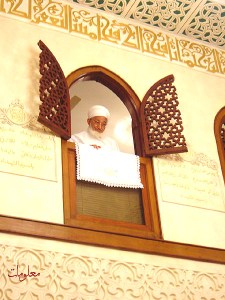
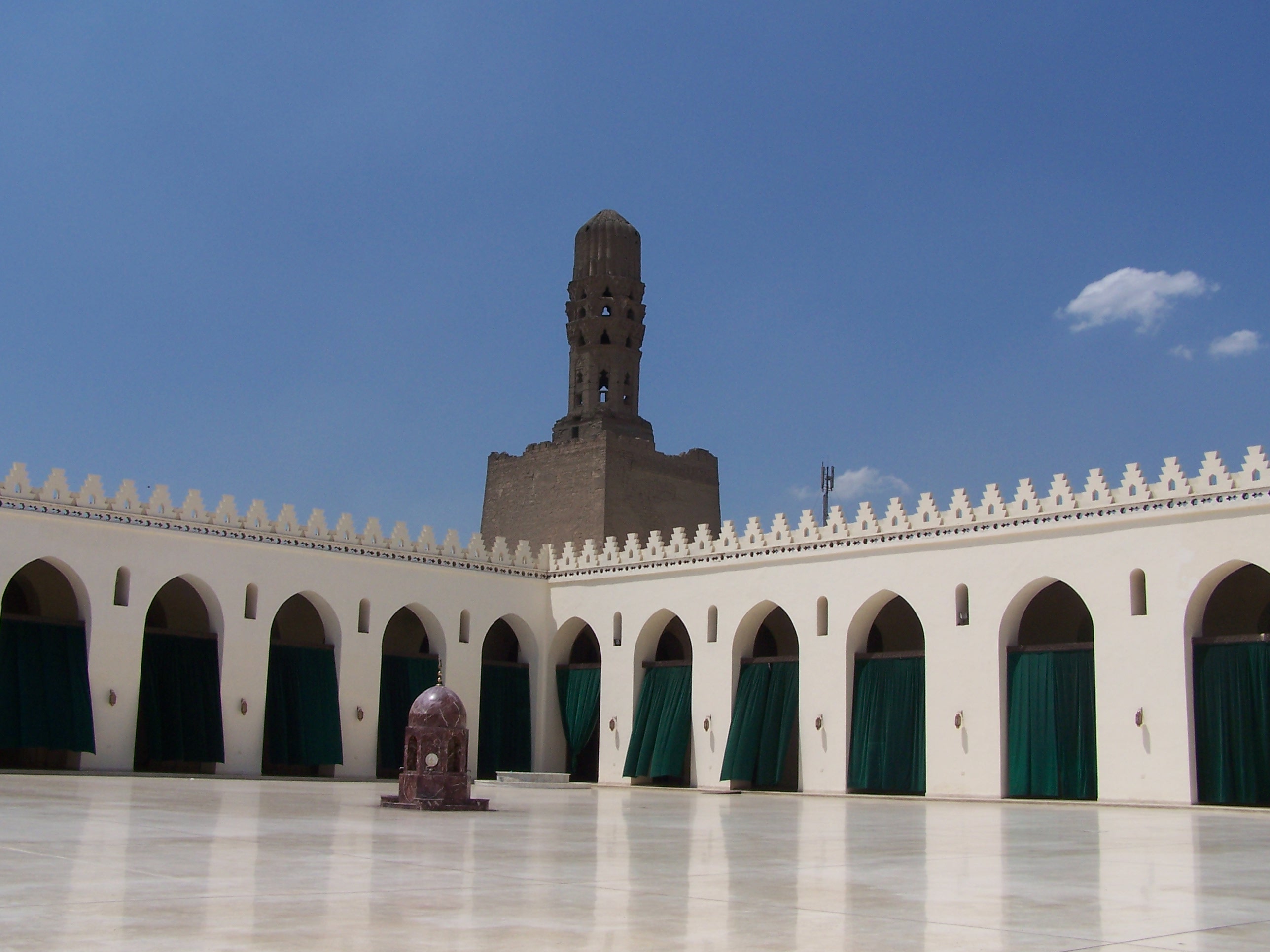
Overlooking from the Ghurfah Mubarakah (Jamea Saifiyah, Surat).

Syedna al Muqaddas RA overlooking from the Ghurfah Mubarakah (Jamea Saifiyah, Surat).

Khuzaima Qutbuddin harbored a deep animosity for al Jamea tus Saifiyah and everything it stood for. If you look back at the last fifty years of his life, you will see there is little to no connection to Jamea whatsoever. In his bayaan uploaded to Youtube (given while Moula Burhanuddin’s RA jism mubarak still lay in Saifee Mahal) he lists his supposed ‘shaanaat’, one of which was that his mithaaq took place in the Iwaan of Aljamea-tus-Saifiyah. He insists it was taken in a similar manner as Syedna Mohammed Burhanuddin’s was in Jamea’s Iwaan. Here, Khuzaima acknowledges the importance of Jamea. He recognizes that the fact that Syedna Mohammed Burhanuddin’s RA mithaaq took place in Jamea is important and by drawing paralells with his own mithaaq and wishes to gain the same legitimacy from Jamea. Generations of Talib e Ilm (students) bear witness that Khuzaima never attended the Imtehan with Syedna Mohammed Burhanuddin RAMany testify that he would attend some Zikra waaz in Surat and then leave before the  Imtehan. Further, on his website www.tahiyaat.com, along with parading his children’s worldly qualifications, he attempted to give credibility and legitimacy to them by stating that they had all received the ‘barakat of Jamea’. How many of his children attended Jamea? How often do they speak of it; contribute to it? The truth is, he and his family wanted nothing to do with Jamea. 

There will be those who argue that Jamea has nothing to do with the physical institute that resides in Surat, Karachi, Nairobi and Mumbai; it is an intangible notion that is beyond space and time which Khuzema and his children are active participants of. Yet the history of the Doat Mutlaqeen RA will stand to negate this argument and demonstrate that with the intangible, the tangible is just as important. Jamea is both spirit and form. In the period of Syedna Abdulhusain Husamuddin RA, there was a group of scholars known as the Uloma al-Sou’, ‘The Scholars of Evil’ who thought it beneath themselves to come to Dars e Saifee (later al Jamea tus Saifiyah) and teach there.  Their arrogance and conceit led them to believe that they in themselves were Jamea: a veritable institution of knowledge. They understood themselves to be disseminators of wisdom and those who sought enlightenment should seek them. Syedna Husamuddin RA responded by saying that if you will not abandon your homes and come to Jamea and teach in its halls, I will personally do so. And he did. Not only have the Doat taught in the institution of Jamea, they have been prepared there as well. Syedna Mohammed Ezzuddin RA and Syedna Tayyib Zainuddin RA were both students of Jamea, prepared in its sacred confines at the hands of the Doat of their time.

Syedna Mohammed Burhanuddin RA has repeatedly stated that Jamea maari zaat che. That Jamea and him are one in the same. Moulana Mohammed Burhanuddin RA demonstrated this Truth not only with his words but his deeds. Every year he visited Surat for Jamea imtehaan (annual exam) and personally conducted and oversaw its administration. Hours upon hours, he would sit and listen to Abna al-Jamea shafahi imtehaanaat and respond and remark. Each imtehaan would begin with the Zikra Khutba which was an unparalleled example of discourse on Fatemi philosophy and history.

Jamea was always on Syedna Mohammed Burhanuddin’s RA khiyaal mubarak. References to Jamea were made on a regular basis in his discourses, qasa’id and munaajaat. He was personally involved in even the most minute details of the academic and financial administration of the campus. His benevolence span every aspect of Jamea life. He treated the children of Jamea as his own children. On the Urs Mubarak of Syedna Ismail Badruddin, he would send special flour which he had personally blessed with his own hands for the maleeda. When he visited, he would enquire into and appreciate even the most youngest students academic endeavours and efforts. Even on secular holidays and occasions, Moula RA would think of Jamea and its students. For Utraan, the Gujarati public holiday, Moulana RA would grant a sum of money to purchase kites and string for students to participate. For Diwaali he would send fireworks. Moulana Burhanuddin RA was always concerned for the well-being of Jamea, its students and khidmatguzar. In fact, one of his biggest tashaareef on his 100th birthday was the announcement regarding the new campus of Jamea in Nairobi.

Today, Syedna Mufaddal Saifuddin TUS embodies Jamea. His every action, his every statement, his every motion, his every movement, his every maatam, his every tear, his every bayaan mubarak, his every harakat and sakanat is Jamea. Even before his nass was made apparent, Syedna Mufaddal Saifuddin TUS was intimately involved in the affairs that concerned Jamea and its students. Syedna Mufaddal Saifuddin TUS graced both the young and the old of the institution: the newly admitted, the aged and experienced. Syedna Mufaddal Saifuddin TUS is to Jamea what Syedna Mohammed Burhanuddin RA was.

How does Khuzaima reflect any single aspect of Syedna Mohammed Burhanuddin’s RA and Syedna Mufaddal Saifuddin’s TUS care, concern and dedication to Jamea? A Jamea khidmatguzar has testified that in his 40 years of service to Jamea, not once has Khuzaima sent instructions for a student to be admitted to Jamea. In fact, a couple from California has recounted an instance where Khuzaima discouraged them from admitting their child into Jamea saying that ‘his/her beliefs would be compromised’. I personally am witness to Syedna Mohammed Burhanuddin RA encouraging, in fact, instructing Mumineen to send their children to Jamea during the wada majlis in Fremont masjid in 2007 during his stay in California. How can an alleged mansoos state that the institution of his Naas (appointer: Syedna Mohammed Burhanuddin RA) has administered and nurtured for fifty years compromises beliefs? Further, Khuzema has been heard stating that Jamea does not do anything but prepare ghundao (thugs) whereas his father Syedna Taher Saifuddin RA has said:

“Behold this Jamea Saifiyah, it has become so prosperous… May Allah Ta’ala give strength to all Talabat al-Ilm (students of Jamea) in their pursuit of knowledge, may He bless them with prosperity in both worlds. They are khidmatguzars. There are those who treat Aamils and khidmatguzar with disdain. DO NOT DISRESPECT THEM. They are my limbs (assistants), they work for me. (Asharah Mubarak, 1379H)”

Although Khuzaima seeks much of his legitimacy from claims associated to Syedna Taher Saifuddin RA, he obviously did not heed his fathers’ words. Khuzaima’s most atrocious act towards Jamea is his sympathy towards the manaahis: the four individuals who Syedna Mohammed Burhanuddin RA removed from Jamea’s pious saahat. What more is there to say about his disregard for Jamea and Burhanuddin Moula RA?

Today it is clear why Khuzaima stayed away from Jamea: He hated the tangible Jamea (al Jamea tus Saifiyah) because he despised the intangible Jamea (Syedna Mohammed Burhanuddin RA).

Of course, like everything else, Khuzaima will claim that he was kept away from Jamea, just like everything else in Dawat. The way he claims he was kept away from his own Moula’s janazah mubarakah. He will claim that there was even an attempt on his life in Jamea; a blatant lie. These are fabrications and delusions of a man who has lost all sense of reality; enough so that he has claimed the mantle of Dawat from its true maalik. If he was the true mansoos of Syedna Mohammed Burhanuddin RA, there would be a love of Jamea in him so strong, so passionate, that nothing could keep him from it. This is what Jamea means to Moulana Burhanuddin RA and his mansoos Syedna Mufaddal Saifuddin TUS and this is the love they have instilled into the hearts of every student who ever benefited from this institution: the very being of the Dai.

Reason # 10 : Lack of Comprehension of Dawat Books & Discrediting others

(Also see refutation #2 below)

This is in reply to today’s addition of point No. 6 (Is a khaangi/private nass valid?) from the FatemiDawat website:

Parents often warn their children about the dangers and consequences of lying. One of them is that, inevitably, lies breed more lies. Under scrutiny, a lie told once usually has to be supported by further lying. Not stellar upbringing from the self- proclaimed “mother of Mumineen”.

This is once again deliberate twisting of the facts and selective reading by Khuzaimas to suite their own agenda.

On page 144 Syedna Taher Saifuddin addresses the mumineen saying: “you are well aware of certain Nass that have been made public and mash’hoor  (clear/well known to all). And it is also possible that some Nass are not made public, rather, they are done in private. You are all aware of many mash’hoor Nass that have taken place during the era of the Imams. We will now talk about the makhfi & mastoor nass.”

The Nass of Ghadeer e Khum  amongst 70,000 people would be considered a mash’hoor Nass. A Makhfi Nass, although private, according to Dawat doctrine (Daim ul Islam), must have witnesses. Syedna is simply clarifying that along with witnesses, both private and public Nass  are possible.

Syedna Taher Saifuddin RA goes on to say what Syedi Ameenjee bil Jalal relates. (See refutation #2 below).

Khuzaima’s sole justification for his alleged nass rests on his selective interpretation of a Risaalah text which he alleges allows nass to be conferred without witnesses.  This claim is wrong for the following reasons:

Reason #1

There were witnesses to the nass of the 8th Dai Syedna Husain RA. A linguistic analysis of the text proves this. In actuality, one word within the following sentence is enough evidence.

“Fa ma ash’hada al shohadaa’aa zaaheran.

The sentence WITHOUT the word ‘zaaheran’ (openly, publicly) at the end would offer the meaning that Khuzaima futilely wishes it does. It would read that:

‘Syedna Ahmed RA did not engage or seek witnesses to the nass.’

However, the complete sentence is:

“Fa ma ash’hada al shohadaa’aa zaaheran.”

The word “zaaheran” adds to the sentence and changes it to read:

‘Witnesses were not engaged to testify ‘openly’.’

Their testimony was not requested or called for publicly. If there had been no witnesses, there would be no need for this additional word. Syedi Ameenji bin Jalal QR would have sufficed with simple “Fa ma ash’hada al shohadaa’aa”.

Reason #2

Many books of Dawat (Daim ul Islam amongst them) make it clear that nass cannot take place without attestation and designation. Witnesses, whether they be overt or covert, are mandatory.

Reason #3

The greatest truth is that Kitaab Muntaza al-Akhbar openly states that the seventh Dai, Syedna Ahmed RA conferred nass on Syedna Husain RA in the presence of witnesses who were trusted dignitaries of Dawat.

***

Now, this where noses start to lengthen. The FatemiDawat site recently updated the following:

Until Syedna Taher Saifuddin wrote about it openly in his Risalat, Syedna Ahmed’s private nass on Syedna Husain was not revealed in zahir history kitaabs. This explains the difference in the version of the zahir history Kitab Muntazaul Akhbar of Shaikh Qutubbhai Burhanpuri, which says Syedna Ahmed performed nass on Syedna Husain in the presence of hudood mukhliseen and mumineen muqineen (i.e. a standard, public nass in front of hudood and mumineen).

How can Khuzaima deny this authentic historical account from a Dawat Kitaab, and make his whole argument invalid? How can he reject a bayaan from a kitaab placed in the course of Al Jamea-tus-Saifiyah by his own father Syedna Taher Saifuddin RA. In not one of his more devious ruses, he simply claims that the information in Muntaza is either incorrect or fabricated!

There can be only two conclusions drawn.

1. Either the history provided in the book is not reliable because the nass in question was not witnessed.

2. Or the author knowingly chose to fabricate.

Khuzaima’s scorn for this azeem kitaab and its revered author could not be more apparent. Classifying it just as a zaahir kitab, he makes it seem as its content is less than pristine, doubtful and of subordinate value. The disdain that he shows for its author is obvious in the way he states his name: “Shaikh Qutub bhai Burhanpuri”, as if his standing is one that could be overlooked. On the other hand this Syedna Taher Saifuddin’s RA risaalah shareefah refers to him as al-Hadd al-Aalim al-Misqaa’ al-Faadil al-Radi (A dignitary of Dawat who is learned, knowledgeable, superior and acclaimed). Khuzaima’s discreditation and disdain is proven incorrect in light of Syedna Mohammed Burhanuddin’s RA attestation to the book’s reverence and its author’s standing by referring to the author as “Syedi al Shaikh Qutub Bhai” (6th Moharram 1426).

This book has been authored, disseminated and taught with the permission of Syedna Abdeali Saifuddin RA. Subsequent Doat Mutlaqeen RA have not only made use of it but have ensured that it be taught to generations of students. Doat Mutlaqeen RA were privy to Syedi Aminjee’s QR bayan. It would not have been so difficult to modify the text of the book so that it would correct this alleged irregularity, had it been as claimed. Furthermore, Syedi al Shaikh Qutub bhai QR compiled this work nearly 200 years after Syedi Aminjee bin Jalal QR, and had attained a very high rutba in ilm. It is very likely that he would have come across the works of Syedi Aminjee bin Jalal QR including the subject caption, thus documenting the history of the 7th Dai accordingly.

This is the trouble with lies. It sucks you in deeper than you had originally wished to go. Today, Dawat books are being discredited. For Khuzaima Qutbuddin, maybe its better if tomorrow never comes.

Conclusion:

Daim ul Islam states that along with Nass, there must be Tawqeef (to inform others). Privately or publicy.

The text of Risalah of Syedna Taher Saifuddin RA and Kitab Muntaza al Akhbar go hand in hand, rather they support each other.

The 7th Dai did Nass on the 8th Dai amoungst witnesses (Kitab Muntaza al Akhbar). These witnesses were not made public (Risalah of Syedna Taher Saifuddin RA).

Khuzaima’s claim of Syedna Mohammed Burhanuddin TUS doing nass on him without any witnesses is totally false.

On the other hand, Syedna Mohammed Burhanuddin RA has done nass on Syedna Mufaddal Saifuddin TUS privately and publicly, according to Dawat doctrines, on:

  • 11 Zil Q 1388 Hijri – 3 Witnesses (Privately)
  • 12 Jam Ula 1415 Hijri – 1 Witness (Privately)
  • 1426 Hijri – 2 Witnes (Privately)
  • 3 Rajab 1432 – 6 Witness (Privately)
  • 19 Rajab 1432 – (Publicly)

Reason # 9 – Al-Jami‘ Al-Anwar

Al-Jami‘ Al-Anwar

Perhaps one of the most momentous milestones in the history of the zaman of Syedna Mohammed Burhanuddin Aqa al-Hayy al-Muqaddas is the renovation of al-Jami‘ al-Anwar in Cairo. Not just once, but over a large period from his magnificent era, Moula al-Hayy al-Muqaddas repeatedly referred to this event and said, “From the day al-Jami’ al-Anwar was built barakaat has flourished in Da’wat.

جه دن سي آ جامع الانور بني چهے ته دن سي دعوة ما بركات عام تهئي چهے. 

Aqa Moula al-Hayy al-Muqaddas RA mentioned these words every time he inaugurated a masjid. In fact, during the iftitah of London’s Huseini Masjid he said, “Because of the inauguration of al-Jami‘ al-Anwar our masjids have flourished, our houses have flourished, our souls (نفوس) have flourished. There is no need for an argument here – just the translation of Aqa Moula al-Hayy al-Muqaddas’s RA bayan which he delivered on the eve of the ifititah of Masjid al-Juyushi in Cairo on the night of Imamuz Zaman’s Salgirah in 1416 H. (1995).

Aqa Moula RA read a zikr from Kitab al-Taharat about a man from the Ansar of Medina who sullied the qibla of Rasullullah’s masjid with his phlegm thus receiving Rasullullah’s SAW laanat. He compared this historical occurence to the restoration of al-Jami’ al-Anwar. The riwayat ends with the actions of the Ansari man’s wife who cleaned the area and applied saffron to it. Rasullullah did dua for this woman and said بارك الله فيها! – May Allah bring barakat towards her! Aqa Moula RA then said,

“Likewise, al-Jami‘ al-Anwar’s qibla had such an amount of stench coming from it due to the excessive amount of trash surrounding it. The door of the Jami‘ had been made into a dumping ground. Every type of garbage was placed there. Then the iftitah of Moulatena Zainab’s Zareeh took place. After that, Mamluk Aale Mohammed went to Kuwait from Misr. At that moment, I told my son, the consolation of my eyes, Mufaddal Saifuddin TUS to stay in Misr. I said, “Stay here and start the cleansing effort of al-Jami‘ al-Anwar.” He himself, started to clean the trash in attempt to find the source for where the stench was coming from around the mihrab. Finally, one person said, ‘come with me, I will show you where the stench is coming from.’ He took them behind the qibla and mihrab to a wakalat where people had taken up residence. They stayed there, placed their trash there, and even defecated there. Forty families lived there and all these things would collect there.

They had dug a hole behind the qibla of al-Jami‘ al-Anwar where all these unsanitary wastes and trash would collect. When they went to take a look at it, it was so horrible that it was almost impossible to stand there because of the immense stench. An effort was made the entire day to find some workers who would clean the area, however, after seeing the state of the place even they were not ready to do anything. Then, in front of the khidmat guzaaro present at the time, my son Mufaddal said, “I will go down and clean this. The mihrab is in such a state! We were unmindful for so long. It is a grave error on our part.” So when he intended to do this, in that moment other workers also came and began to clean. The hole was between two to three meters deep. They cleaned it and fragranced it with bukhur.

 From that day onwards the impact of the injustices upon this Jami‘ Anwar began to fade. Now look Mumineen! How fragrant is the mihrab of Jami‘ Anwar!

 This Husain al-Hakim is honoring his Da’i with the saffron of barakaat and the sa‘aadat of misk. Today, I, Mamluk Aale Mohammed, am doing dua for the khidmat guzaaro. I am also doing dua for my son Mufaddal. As Rasullullah SAW did dua for that woman (the Ansari’s wife) and said the luminous words of “barakallaho fiha” – I, Mamluk aale Mohammed am saying that – he (Syedna Mufaddal Saifuddin TUS) did the khidmat of these Jawami‘, may Allah make his effort appreciated!” (Lailat Milad Imam iz Zaman SA – Jami‘ Juyushi – Cairo 1416 H./ August 1995)

There is no need for a comparison here and it is not right on our part to compare the zaat mubaraka of Dai Zaman Syedna Mufaddal Saifuddin TUS with anyone else. However, one brief question does arise in context of  Khuzaima claiming rights to the name Fatimi Dawat. What role did Khuzaima have in the construction efforts of al-Jami’ al-Anwar – a glorious event which brought about a revolution of Fatimi inspired architecture all around Bilad-i Iman and the world? By what right does he claim to be the head of the Fatimi Da’wat when Moula Burhanuddin RA never attested to any effort on his part to increase the glory of A’emat Fatimiyyeen. These recent events which have taken place are another attempt to tarnish and sully the glory of Da’wat with the trash and rubbish of ignorance and unmindfulness – very representative to the injustices done upon Jami’ al-Anwar. However, rest assured – this too will surpass and be cleaned. The fragrance of the misk and zaafran of the zamans of Aqa Moula al-Hayy al-Muqaddas RA of Syedna Mufaddal Saifuddin TUS are experienced every day by us. Do not let this lurking stench sully their zikr and memory in any way.

Reason # 8: Echoes of Past Fitnats in Our Zaman

Syedi Qutub b. Suleiman does the zikr of a major finat which occured in the zaman of Syedna Dawud B. Qutub Shah RA in the Kitab Muntaza‘ ul Akhbar. The dushman, Suleiman Laeen b. Syedi Hasan, did baghawat in the era of Syedna Dawud b. Qutub Shah RA in which Moula RA and Mumineen underwent an immense mehnat. After this event, a schism occurred in Da’wat which is present until this day (Suleimani Bohras). In this zikr, Syedi Qutub writes that it is very astonishing that Suleiman did iqrar of (accepted) the nass of Syedna Dawud b. Qutub RA for three years. Proof is found in his actions as well as several letters that he wrote to him. It wasn’t until after three years after accepting nass and the position of Syedna Dawud b. Qutub Shah RA that he proclaimed himself the ‘muddai.’

This fitnat, which is only briefly referred to here, is quite reminiscent to the video included above of the son of  Khuzaima, Abdeali. This video was taken in Ujjain in 1433H during the Ashara waaz. Shehzada Qaid Johar BS also confirmed in his letter to the Hindustan Times in April 2013, that Khuzaima himself had congratulated Syedna Mufaddal TUS on becoming Mansoos of Syedna Mohammed Burhanuddin RA. On Khuzaimas previous site, http://www.Tahiyaat.com, in the events section there was news that Khuzaima himself had presided over the Majlis of the Urus of Syedna Noor Mohammed Nooruddin on 4th Rajab 1432 (the day after the London Nass was made public), where the bayaan of Shehzada Qaid Johar BS regarding the Nass was relayed. Khuzaimas team have now removed that site and forwarded the domain to their current site, thus destroying all evidence. There are also many instances when Khuzaima has talked about the Nass on Syedna Mufaddal Saifuddin TUS after 1432H (when the nass was made public) and done dua for him. The mumineen of America, Canada and Secundrabad are witness to this. 

Khuzaima sitting below Syedna Mufaddal at Shz Hatim BS Sadaqallah

Khuzaima sitting below Syedna Mufaddal at Shz Hatim BS Sadaqallah

Inkaar after doing Iqraar.

History repeats itself.

UPDATED ON FEBRUARY 26 2014

Below is an old screen shot of a page from Khuzaima Qutbuddin’s official website http://www.Tahiyaat.com. In the news section it mentions that Khuzaima did sit over the Majlis in which the Nass recording was relayed from London. The site accepts the Nass, and refers to Syedna Mufaddal Saifuddin TUS as “al Mawlal Ajal Syedi Ali Qadr Mufaddal Saifuddin TUS”.

tahiyaat_then

As expected, this site has now been deactivated, and all evidence has been destroyed by Khuzaima’s team. This screen shot was saved 3 years ago, and sent to me recently by a viewer of this page.

No matter how much how one tries to conceal facts, the Truth will prevail.

Is this not inkaar after iqraar?


UPDATED ON MARCH 02 2014

The following testimony from a Yemeni Khidmat Guzaar confirms that Khuzaima Qutbuddin was aware and accepted the Nass on Syedna Mufaddal. He did inkaar after iqraar (accepting the Nass)

Reason # 7: Why Would Khuzaima Be In The Rutba of Izn For Fifty Years And Have Never Been Removed?

For many people the question might arise that how could Khuzaima Qutbuddin have remained in his position for so long and never been removed. In fact, this is one of the claims that he and his children have purported on their website, Fatimidawat.com, “On 17th Shaban 1434H Syedna Qutbuddin became the only Mazoon in the history of Dawat to serve a single Dai for fifty years. Despite many attempts by those exploiting Syedna’s trust over the years – especially Shehzada Mufaddal bhaisaheb – Syedna Burhanuddin maintained without fail, in every misaq and every majlis, that Syedna Qutbuddin was his Mazoon.”

 This might seem compelling if one did not keep the history of Da’wat in mind. Aqa Moula al-Hayy al-Muqaddas Syedna Mohammed Burhanuddin RA always read the zikr of Rasullullah’s SAW zaman in his Mawa’iz Nuraniyya (bayaano). Even at that time there were certain figures whom we all know seemed very close to Rasullullah SAW. Rasullullah SAW did not explicitly remove them from Da’wat, rather he kept them close and in their positions. This might be a very difficult concept to understand, however, it is by no means an isolated event in Da’wat’s history. Awliyaullah AS have followed this policy, one that is focused on the prosperity and of Da’wat and the preservation of the nufus of mumineen.

 For instance, Aqa Moula al-Hayy al-Muqaddas RA has done bayan in his Risala Sharifa, Rawḍ Dār al-Salām, about the 41st Dai Syedna Abduttayyib Zakiuddin RA and his organization of the tartib of the hudood when he ascended to ‘Arsh ud Da’wat (pgs. 257-258). In this event, Syedna Zakiuddin RA kept some of the hudood in their positions despite their insufficiencies, either completely or partly, in knowledge (‘ilm), deeds (‘amal), and walayat, because the time at hand required the political step to do so. This was done for a reason and matter keeping in mind the the ultimate welfare of the Da’wat and the conformity and harmony of the community at large.

 Therefore, it shouldn’t be that surprising that this policy, one with spiritual benefits in mind, also took place in this zaman. Aqa Moula Syenda Muhammed Burhanuddin RA always kept the well-being of mumineen in mind and emphasized the forces that united us rather than pay attention to the lurking darkness that might divide us. Therefore, this might explain why Khuzaima waited until Moula al-Hayy al-Muqaddass RA closed his eyes for eternal rest to deploy what he has been scheming for fifty years.

Reason #6 Khuzaima Qutbuddins absence during the Janaza Namaz and final rites

In one of Syedna Taher Saifuddins RA Risalah Shareefah “Khazaain Imam al Muttaqeen” (page 275), referring to the demise of the 28th Dai, Syedna Shaikh Adam Safiyuddin RA, he states:

“On the demise of Syedna Shaik Adam Safiyuddin RA, his Mansoos Syedna Abdut Taiyeb Zakiuddin RA performed the Janaza namaaz. This has been the “Sunnat of Dawat”, and this has been tradition followed till date; that the Mansoos must perform Janaza Namaaz on the Dai. Unless if the Mansoos is not present in the area the Dai passed away in.”

  • Khuzaima Qutbuddin was in Mumbai on the death of Syedna Mohammed Burhanuddin RA, furthermore, he had even visited Saify Mahal before he left for Thane Dar us Saqifa (Sakina).

  • The Risalah Shareefah clearly states that this action (Mansoos praying Janaza Namaz on the Dai) is the Sunnat of Dawat. And the Quran repeatedly says that the Sunnat of Allah cannot be changed.

  • If Khuzaima Qutbuddin claims to be the True Mansoos of Syedna Mohammed Burhanuddin RA, why didn’t he uphold and fight for the Sunnat of Dawat, which is clearly the biggest responsibility of a Dai?

  • Why did he only decide to send a PDF letter via email to Syedna Mufaddal Saifuddin TUS, and Syedi Mukasir Saheb claiming his right? (He even forgot to insert the “Bismillah” in the letter to Mukasir Saheb, which was removed from their site!). Why did he run-away to Thane and focus on recording videos and designing websites? Just like after the death of Rasulullah SAW, while the True Syedna was involved in Ghusul, Kafan & Dafan, Khuzaima was busy in his Dar us Saqifa (Sakina) launching the fithnat he had been planning many years in advance.

  • In his video, he claims that he didn’t want bloodshed, thus refrained from attending the funeral. Why didn’t he exercise his political, legal and media clout (which he clearly has at his disposal) to make this a reality? Surely he could have done this for the 52nd Dai, for whom he claims to be his most loyal and beloved successor. Furthermore, he had almost 24 hours to make it happen. The Sunnat of Dawat must be upheld at all costs. Why didn’t he assert his rights? In my opinion he should have stayed in Mumbai and exhausted all possible means to complete this amal, had he been the lawful person for this rite. If we read history, Rasulullah SAW was stopped from entering Makkah during the Umrah al Hudaibiyah, but he still made an effort to leave Madina and traveled the entire distance to Makkah to enforce his right, and then camped out of Makkah negotiating with the Mushrekeen of Makkah, and then was later refused to enter, after entering into a pact. Khuzaima Qutbuddin didn’t even get up from his seat from which he made his video statement. The truth is, he didn’t even care about Syedna Mohammed Burhanuddin RA & the Sunnat of Dawat, let alone come to his Janaza.

  • Syedna Mufaddal Saifuddin TUS, though away at the time of Syedna’s demise, moved heaven and earth to be by his father and Naas’s side, in a very short time. Such is the power of the magnet of true love, where distance has no boundaries.

Quoting the true words of a Mumin Muklis:

“He who does not come to my fathers Janaza, I refuse to call him my friend. He who does not attend my Moulas Janaza, how can I consider him my leader?”

The true Mansoos of Syedna Mohammed Burhanuddin RA by his Janaza

The true Mansoos of Syedna Mohammed Burhanuddin RA by his Janaza


Reason #5 Analysis of Nass Video on Khuzaima Qutbuddin’s Website

(Author un-known: Message forwarded on Social Media)

A video of the Nass e Jali on Syedna Mufaddal Saifuddin TUS on 19th Rajab 1432H has been posted on Khuzaima Qutbuddin’s website. The video is meant to underpin Khuzaima Qutbuddin’s allegations that this Nass was orchestrated by Shahzadas and others and that:

“No one heard Syedna Burhanuddin utter the Nass”

“Syedna Burhanuddin did not recognise Mufaddal bs standing 2 feet in front of him”.

“No one heard or understood anything from Syedna’s lips”

“All anyone heard was Dr Moiz Bhaisaheb reading from a prepared script”

“Others hijacked the person of Syedna Mohammed Burhanuddin and also his name”

A close inspection and analysis of the aforementioned video as posted on their website, provides evidence to the contrary.

 As the video begins, in the very first few seconds, (0.05 on timeline) we can see that Syedna Mohammed Burhanuddin has arrived in Rawdat Tahera. He is being carried in a miyaana and can be seen clearly responding to the thousands who had gathered by giving salaami with his right hand. The right hand is not just stationery (0.21 on timeline) but is being moved by Syedna Mohammed Burhanuddin as he has always done. Just before he enters the qubba, Syedna Mohammed Burhanuddin looks towards his right, in the direction of mumineen (1.14 on timeline).

The video moves to next scene which shows Syedna Mohammed Burhanuddin seated next to the qabr mubarak of Syedna Taher Saifuddin. The viewer can easily see that he is using his left hand to rest on the marble perimeter which runs along the length and breadth of the qabr mubarak (1.26 in timeline). Furthermore during the course of Syedna Mohammed Burhanuddin being seated, he is constantly seen adjusting his clothes, specifically his dupatta with both hands (1.54 and 2.02 on timeline). We can also see him giving salaami to the Shahzadas seated on his right hand side (2.20 on timeline). He is also seen moving and adjusting his feet as he is seated on a chair (3.22 on timeline). Syedna Mohammed Burhanuddin can be observed to be moving towards the qabr mubarak and bending down to do ziyarat of his own volition (3.38 on timeline). As Syedna Mohammed Burhanuddin stands up and performs tawaaf of the qabr mubarak, he is assisted by Dr Moiz Bhaisaheb and Shahzadas and we can see that he himself is walking and taking his own steps without any assistance as he goes round the qabr mubarak (5.05 on timeline).

We can see that Syedna Mufaddal Saifuddin is affixing the bismillah on the marble wall in the corner of the qubba and Abdulqadir bs is seen presenting Syedna Mohammed Burhanuddin with the next piece of bismillah. Syedna Mohammed Burhanuddin can be seen placing his hand on this piece and placing his hand back on his lap (7.50 on timeline).

As the video moves to the majlis which was held outside the qubba, Syedi Mukasir Saheb is seen taking Syedna Mufaddal Saifuddin’s hand and doing talaqqi. Syedna Mohammed Burhanuddin is seen looking towards Syedna Mufaddal Saifuddin and then moving his right hand from a stationary position on his lap to gesturing and granting raza to Syedna Mufaddal Saifuddin (9.47 on timeline) as well as Syedna Mohammed Burhanuddin moving his head to look towards Syedna Mufaddal Saifuddin.

Syedna Mufaddal Saifuddin comes forward to Syedna Mohammed Burhanuddin, and Syedna Mohammed Burhanuddin leans forward as his mansoos approaches, visibly recognising him (10.01 on timeline). The proximity of Syedna Mufaddal Saifuddin to Syedna Mohammed Burhanuddin, enables him to see him clearly (10.19 on timeline) and as a result, Syedna Mohammed Burhanuddin places his right hand on the shoulder of Syedna Mufaddal Saifuddin (10.24 on timeline).

Syedna Mufaddal Saifuddin bends down to do qadambosi and then does sajdo and Syedna Mohammed Burhanuddin gestures with his right hand again, and Syedna Mufaddal Saifuddin returns (10.44 on timeline). A few moments later after Dr Moiz Bhaisaheb is kneeling next to Syedna Mohammed Burhanuddin,  Syedna Mohammed Burhanuddin turned again to Syedna Mufaddal Saifuddin and indicated with a very noticable gesture of his right hand, that Syedna Mufaddal Saifuddin should be seated (11.35 on timeline). From that moment uptil 12.23 on the timeline, Syedna Mohammed Burhanuddin keeps his right hand in the position of giving raza until Syedna Mufaddal Saifuddin was seated and once he was seated, only then did Syedna Mohammed Burhanuddin turn to speak with Dr Moiz Bhaisaheb, and we can see that he is perfectly capable of communicating and being understood.

At 12.38 on the timeline, Dr Moiz Bhaisaheb places a microphone in front of Syedna Mohammed Burhanuddin and almost immediately Syedna Mohammed Burhanuddin holds the mike in his right hand. He then gestures to Syedna Mufaddal Saifuddin to come and kneel in front of him and again holds the mike. We don’t see anyone thrusting the microphone in front of him or coercing him to say or do anything (12.58 on timeline). As Syedna Mohammed Burhanuddin speaks, Dr Moiz Bhaisaheb on hearing and understanding what he is saying, repeats what he has said for the benefit of those gathered. Anyone viewing this video can plainly see that there is no ‘script’ which is being read by Dr Moiz Bhaisaheb as the claimant has alleged. He is repeating what Syedna Mohammed Burhanuddin is verbally conveying (13.30 on timeline).

After Syedna Mufaddal Saifuddin finishes his araz, he proceeds to do qadambosi of Syedna Mohammed Burhanuddin and we can immediately see the almost instant response of Syedna Mohammed Burhanuddin where he opens his fingers so that Syedna Mufaddal Saifuddin can do salaam (17.12 on timeline) and at 17.25, we can see Syedna Mohammed Burhanuddin taking the najwa envelope from Syedna Mufaddal Saifuddin and handing it to Sh Kauser bhai Yamani.

The claimant was not even present during this historic and auspicious event, even though it was also the Urus of his own father, Syedna Taher Saifuddin. Again, it is a exaggerated claim that not a single individual heard or understood Syedna Mohammed Burhanuddin’s words or that he was incapacitated or that he was hijacked, when he himself was not there in person to witness the events which took place. Instead he has relied on a video of the event and misconstrued the reality of what occurred to serve his own purpose.

We can see at 21.20 on the timeline that Syedna Mohammed Burhanuddin calls for the microphone and Dr Moiz Bhaisaheb signals everyone to remain silent. At 21.59 when Dr Moiz Bhaisaheb pulls the mike away, Syedna Mohammed Burhanuddin again calls for it and even at 22.30, Syedna Mohammed Burhanuddin can be seen taking hold of the mike. After matam starts, Syedna Mohammed Burhanuddin recalls Dr Moiz Bhaisaheb by gesturing with his right hand and lowers it as soon as he has seen that Dr Moiz Bhaisaheb has responded (23.20 on timeline).

During Shehzada Qaidjohar Bhaisaheb’s araz, there is no doubt that Syedna Mohammed Burhanuddin lifts both his hands to adjust his paaghri (31.30 on timeline). Furthermore, it is incontestably evident that Syedna Mohammed Burhanuddin is attentively listening to his araz which is relatively lengthy, in which Shahzada Qaidjohar Bhaisaheb mentions in detail the Nass on Syedna Mufaddal Saifuddin. Is the claimant alleging that Syedna Mohammed Burhanuddin can hear what Shahzada Qaidjohar Bhaisaheb is saying, but is helpless to respond or prevent what Shahzada Saheb is referring to? At 32.51, Syedna Mohammed Burhanuddin is accepting the najwa envelope in the same fashion in which he has always done in every majlis, bethak and ziyafat. Is the claim that Syedna Mohammed Burhanuddin is unaware of why the najwa is being presented? If so, why would he accept it? Can anyone prove that he is being coerced to do so?

Syedna Mohammed Burhanuddin looks up at 27.44 and sees that Syedi Mukasir Saheb and Shahzada Qaidjoher Bhaisaheb are waiting to with a shawl for Syedna Mufaddal Saifuddin. He then motions for them to proceed. At 27.51 we can see Syedna Mohammed Burhanuddin grasp the end of the shawl in order to drape the shawl on his mansoos.

A notable question which arises is that if Nass was not conferred during this event, then what justified the draping of a shawl on Syedna Mufaddal Saifuddin? Syedna Mufaddal Saifuddin was not hosting a ziyafat that would explain the giving of a shawl, nor was any other member of the congregation accorded this sharaf. In light of all the above, including the clearly recorded words audible in the audio files, the only explicable justification for this sharaf is that Nass was renewed on Syedna Mufaddal Saifuddin.

We then also see at 33.45 that Syedi Mukasir Saheb performs the wadhawanu rasam to Syedna Mufaddal Saifuddin and he uses the same thaali to do so, which was used for Syedna Mohammed Burhanuddin.

There is no confusion that, aside from Dai al-Zaman and his Mansoos, there were no individuals present in that congregation who ranked higher than Syedi Mukasir Saheb. However it was Syedi Mukasir Saheb who (i) did talaqqi of Syedna Mufaddal Saifuddin, (ii) performed wadhaawanu rasam to Syedna Mufaddal Saifuddin and (iii) assisted in draping the shawl on him as well. In all three instances, it is evident that Syedi Mukasir Saheb accepted the previous news of Nass on Syedna Mufaddal Saifuddin in London, as well as understood, comprehended and accepted the conferring of Nass on 19th Rajab 1432H. If not, then what is the justification of a significantly higher ranking Hadd to interact with a Shahzada in this manner? Is the claimant also suggesting that Syedi Mukasir Saheb too is incapacitated or being coerced?

UPDATED 15 FEB 2014

In the un-edited version of the video uploaded by the Fatemi Dawat site, at exactly (26:53 to 26:57) Syedna Mohammed Burhanuddin says “Mufaddal Bhai ne Nass nu Taaj“. We can also clearly hear Moula stating “Khuda Barakat Aape” (32.40 – 32.43). This statement of Moula is in response to Shz Qaid Johar Bhaisaheb’s Araz. Although most of the other words are a bit muffled, these statements are very clearly heard. Please view this link for the video:

http://tune.pk/video/1935471/Raudat-Tahera-19-Rajab-1432H

(The original video posted by the FatemiDawat has been removed, but is available here)

This refutes their claim that the statement wasn’t clear, Moula’s speech was impaired, and Syedna Burhanuddin did not perform the Nass publicly.

Reason # 4 The Credence Of The Witnesses Of Aqa Moula al-Hayy al-Muqaddas’s Nass Mubarak

Khuzaima Qutbuddin Dismisses the Testimony of Shahzadas.

The Definition of a Witness in Da’aim al-Islam is as follows:

Syedna al-Qadi al-Noman RA in his argument against those who deny the occurrence of nass on Moulana Ali AS, claiming that they did not see or hear anything themselves, provides the definition of a witness:

“A witness is one who verifies and confirms something that has happened.” In addressing those Muslims who reject the nass upon Moulana Ali, he says, “You claim that Rasulullah SAW failed to appoint a single individual to succeed him or appoint an Imam who would lead his Ummah, yet you were never privy to witness anything (from that time). You dismiss and deny that which you have no knowledge [nor were you present to see]. Whereas the testimony of one who actually witnesses that particularevent is in a greater position to be accepted… A witness who has seen and heard an event is the witness whose word should be taken and whose testimony should be accepted. The one who has not heard or seen anything cannot be considered a witness, nor can his word be used against the one who stands witness by both sight and hearing.” (Zikr al-Bayan bi al-Tawqeef ‘ala al-A’imma Min Aale Mohammed SA)

On Fatemidawat.com Khuzaima Qutbuddin and his children have allegedly brought doubt upon the sequence of events of the nass proclaimed by Syedna Mohammed Burhanuddin RA. They argue how things that have actually transpired are improbable. They propound that their doubts regarding the transpiring of an event that they were not present for should outweigh the testimonies of the eyewitnesses of that same event. Syedna al-Qadi al-Noman’s RA words above help identify the fallacy of their argument.

Reason # 3: How can “The Second in Command” Go Against The Dawat?

On the Fatemidawat.com website and especially in the media Khuzaima Qutbuddin and his sons question how the second-in-command” can rebel against the Dawat.

 Unfortunately, once again the claims that Khuzaima Qutbuddin and his children have made are not correct. Again we turn to the Kitab – Muntazaa ul Akhbar where the zikr of the 29th Da’i Syedna Abduttayyib Zakiuddin RA clearly shows that this has happened in history. Syedi Shaikh Qutub b. Suleiman does zikr that Ali b. Ibrahim  had initially accepted Syedna Abduttayyib Zakiuddin RA (29th Dai) as Dai al Multaq, he went against him. (Note: We do understand  that certain communities outside of Dawoodi Bohras do not hold this view point and we do not mean to offend them in any way. This is the history of Ali b. Ibrahim which appears in the book that we have quoted and may not reflect the personal viewpoints and ideas about this historical figure by other religious communities). Some time later, he came to seek forgiveness from Syedna Abduttayyib Zakiuddin RA who acknowledged his repentance and appointed him in “al Mahal al Thaani” “second in command.” However, after thirty-three months he regressed to his former disposition and openly rebelled against Syedna Abduttayyib Zakiuddin RA declaring that he was the Dai.

Syedi Shaikh Qutub b. Suleiman writes in Muntaza al-Akhbar that:

“Ali b. Ibrahim, though second in command, led himself to be tempted and seduced by material gain. He lay claim to the position of the Dai as he had done so before. He desired his Maula’s respected position for himself. He bragged about the wealth he had accumulated through improper means. He claimed that he was more deserving of being a Dai than Syedna Abduttayyib Zakiuddin RA…he transgressed all limits in his attempt to secure this position. He thought that with the help of his Shaitans– a builder and a diver- he would fulfill his desire. But what happened was the opposite; The house was protected by its lord. He began to corrupt the people of Da’wat, instigate Mumineen against the Dai, bind them using spells of Haroot and Maaroot, he misled them with fabricated narrations of Taim and Adee, and entice people through their inclinations. He created a great deal of disorder in Da’wat. When Syedna Zakiuddin heard about his actions he removed him and three others from the hierarchy of hudud.”

Sound familiar? History repeats itself.

« Older Entries Recent Entries »