Monthly Archives: February 2014

Reason #64: Q & A (Part 2)

(Continued from Reason #63)

They question why Sh Ibrahim Yamani’s Nass document (of 1388H) and Sh Abdulhusain Yamani’s diary entry (of 1415H) was not made public in 1432H.

  • In 1432H, after nass, the existence of Sh Abdul Husain’s Diary (of 1415H) was known to the general public, many had a images of the pages as as well. This diary entry referred to the 1388H nass where his father, Sh Ibrahim Yamani and 2 others were informed.

  • The document of of nass prepared by Sh Ibrahim Yamani in 1388H was only revealed recently, as we have just come to know that this document was not kept with Sh Ibrahim Yamani’s other belongings. Rather, (as explained to us by Syedna Mufaddal TUS in the 4 Rabi al Akhar 1435 waaz) it was protected and kept in Saifee Mahal in Syedna Taher Saifuddin’s RA room, in a teak cupboard, along with some other private documents by Syedna Burhanuddin RA himself. We were even informed that this cupboard was kept locked and Moulana RA would tend to it personally.

  • This document was the property of Syedna Mohammed Burhanuddin RA and it was his choice whether or not it should be made public.

  • Moulana Burhanuddin RA had done nass on Syedna Mufaddal Saifuddin in 1432H both in the hospital as well as in public on the day of urs mubarak. There was no need to reveal the document. Moulana RA himself had done nass, who would doubt him?

  • It only makes sense that the nass document was revealed now in order to confirm beyond all doubt that Burhanuddin Moula, the 52nd Dai, appointed Syedna Mufaddal Saifuddin as the 53rd Dai.

They allege that the Nass document of 1388H by Sh Ibrahim Yamani is a forged document. And add that with today’s technology, it is very easy to forge a document.

  • How can they refute the genuineness of this document, without seeing or assessing it?

  • With the technology available, it is possible to forge a document, but there are ways of verifying it.

  • Just as it is easy to forge a document, it is easier to be delusional and imagine that someone did Nass on you, without any witnesses. You don’t even need technology for that.

  • In the past, Sulaiman did present a forged document. But according to Dawat History, the strongest argument against his false claim is that he accepted the Daiship of Syedna Dawood RA for 3 years, gave Mubarakbadis and even wrote Qasidas in his shaan. This sounds very familiar, as Khuzaima did accept the Nass on Syedna Mufaddal TUS for 3 years as well. (Refer to Reason #8 below).

  • If they would like to draw a parallel with history: Laeen Majdu was delusional and claimed that The Imam had spoken to him directly and secretly. Similarly Khuzaima is delusional to claim that Syedna Burhanuddin RA did Nass on him privately without any witnesses. (Interesting fact: Laeen Majdu made his false claim during the era of the 40th Dai Syedna Hebatullah RA. Syedna Hebatullah’s RA wiladat was on the 16th of Rabi al Awwal 1125H, the same day as Syedna Mohammed Burhanuddin’s RA demise. History does repeat itself. One delusional Majdu, and the second a delusional Khuzaima.)

They allege that Syedna Mohammed Burhanuddin RA was being forced and attended many gatherings against his own will.

  • If the Dawat was under ‘siege’, and Syedna RA was being oppressed, as Khuzaima claims, why didn’t he come to the rescue of his Moula? (See Reason #42 for more details). If the entire Dawat has been led to believe that Syedna was doing these acts on his own accord, with his own free will and they were UNAWARE of Moula’s troubles, and Khuzaima and his folk were the only ones who knew otherwise, who knew the TRUTH, that Moula, na’uwzobillah, was being used and hijacked, that he was in pain and discomfort, it was their OBLIGATION AND RESPONSIBILITY, not only as an alleged mansoos, but as even a Mumin, to rectify the situation and come to the aid of their Moula no matter what obstacles were in their way and no matter what the perceived consequences on his person or property. What Mumin would knowingly watch what he claims was torture, hijacking, and abuse of their Moula? On top of this, Khuzaima has the audacity to say that it was he who was doing sabr?

  • They refer to this video posted on the FatemiDawat site, trying to prove that Syedna was being forced to do ishara (gesture) of the Shahadat Sajda on Ashura day. This video actually works against their claim. It is evident in the video that Syedna Mufaddal TUS is gently trying to aid Syedna Burhanuddin RA in doing this amal, but as soon as Syedna does ishara with his hand, Syedna Mufaddal TUS stops. This is proof enough that Syedna Mohammed Burhanuddin RA was not forced against his own will.

Bazat Tahera and Husain claim that Dawat history is proof that many children and grandchildren of the Imams and Duats have rebelled against the Dawat. For example, during the era of Syedna AbduQadir Najmuddin (47th Dai),  there were many munafiqeen that were in certain positions in the Dawat.

  • This is true. There have been many instances like this. A perfect example of an ‘enemy from within’ and rebelling against the Dawat is Khuzaima himself. Just as there have been children who have done fitnat, there have been in many cases brothers as well, example Zayd & Nizar,

  • Analysing the case of Syedna Abdul Qadir Najmuddin’s RA time. Undoubtedly, there were munafiqeen from within, but what Tahera Qutbuddin fails to mention is, that during this critical time, Syedna Abdul Qadir Najmuddin’s Mansoos, Syedna Abdul Husain Husamuddin RA and other Mukliseen Hudood were always by his side. Khuzaima and his clan here suggest that EVERY SINGLE LAST PERSON abandoned the Dai, Haqq na saheb? Such an occasion has never happened in the history of Dawat. With Amirul Mumineen, Imam Husain, Syedna Dawood b. Qutubshah, in all of these instances, there were Hudood who remained at the side of Moula, the foremost being the mansoos himself.  Haqq na sahib was never alone and his mansoos was at his side. Where was Khuzaima during the last three decades and most importantly, the last three years of Moula’s life?

Reason #63: Q & A (Part 1)

The following claims and statements were made by Bazat Tahera and her brother Husain Qutbuddin in their attempts to ‘help’ Mumineen ‘see’ the truth. Here, their fallacies and fabrications have been clarified.

Referring to the Nass of 1426H, Bazat Tahera claims that there are many discrepancies in the versions of this Nass. She says in one version, Shehzada Qusai BS was present with Shehzada Qaid Johar BS.

  • Firstly, there have been absolutely NO discrepancies in this report and only one version, the actual version, of this nass has been narrated. Burhanuddin Moula informed both Shehzada Qaid Johar BS & Shehzada Malikul Ashtar BS of his nass upon Syedna Mufaddal Saifuddin in London in 1426H. This was when Moulana’s mizaaj was not well, before even the incident in 1427 where Moula stayed in Saifee Hospital for three months. During the last decade, this was Moula’s first severe illness and he immediately revealed his nass to his closest confidants, his own two children.

  • Unlike BT’s claim, there has been no version of this nass narrated with Shz Qusai BS being one of the witnesses. She deliberately throws in names to confuse people.

  • In fact, a few hours after the 1432H Nass in London, Shehzada Malikul Ashtar BS did a bayan in Houston and related the incident in London in 1426H. This bayaan was relayed to all centres in USA. This was the first time anyone had heard about this incident, directly from one of the witnesses.

  • This incident is also documented in detail in Syedna Mohammed Burhanuddin’s TUS Risalah Shareefah Zaat al Noor (1388H), that was published in 1432H (after the Nass was made public).

Bazat Tahera also refers to a Risala of 1392H where a certain Nass is mentioned.

  • She seems ignorant to that fact that, till this date no such risalah has been published. The last published risalah is Barakat o Sibghatillah (1390H). Again, by taking names and mentioning dates of risalahs, BT tries to show her audience she is informed and that there is authenticity to her words. However, the fact that she refers to a risalah that has yet to be published demonstrates that she is preying on people’s ignorance and throwing terms around in the hope that people will find her authoritative.

Bazat Tahera says that ‘there is no record in history that the Mansoos hasn’t been informed that he is the Mansoos’. She alleges that Syedna Mufaddal only found this out in London 1432H, and that is the reason why he was so shocked.

  • First of all, her statement is a double negative.

  • Secondly, it is completely UNTRUE that there has never been a mansoos who was unaware of nass being done upon him by his predecessor. Just one example will suffice. When Syedna Abdullah Badruddin RA appointed Syedna Taher Saifuddin RA as his mansoos, he did so at night before witnesses. However, Syedna Taher Saifuddin RA himself was not present. It was only in the morning that Syedna Taher Saifuddin RA was called by Syedna Badruddin RA and informed of the nass. Moula Burhanuddin RA often recounts this event. Obviously then, there have been periods, whether they have been a single night or several years, where a mansoos has not been informed that he is the mansoos.

  • Syedna Mufaddal Saifuddin TUS had been informed that he was Syedna Burhanuddin’s mansoos, by Burhanuddin Moula himself. During the waaz on 4th Rabi al Akhar 1435, Syedna Mufaddal Saifuddin TUS stated that Syedna Mohammed Burhanuddin had in fact told him about the Nass in 1430H. He was aware of the Nass before 1432.

  • Syedna Mufaddal’s reaction to hearing the other Shazadahs was simply out of concern and care for Burhanuddin Moulas health, not that he did not know that he was mansoos. He feared something may have happened. Indeed, most Mumineen when upon hearing the news of the nass, especially having known Moulana had suffered a stroke a few days earlier, reacted similarly.

The Qutbuddins and their very few followers constantly say that they did not hear Syedna Mohammed Burhanuddin perform Nass on Syedna Mufaddal TUS in Raudat Tahera.

  • (Please refer to  Reason #5) The words “Mufaddal Bhai ne Nass nu Taaj” are very clear in the video posted on the FatemiDawat.com website.

  • This was heard by all those who were present, and who heard the relay. Thousands have seen and heard this.

Reason #62: His Own Dawat

Khuzaima Qutbuddin began his Dawat with the launch of his ‘official’ site while Burhanuddin Moula’s RA jism mubarak was still being laid to rest by Syedna Mufaddal Saifuddin TUS. While Mumineen were mourning their father, some literally while watching the mubarak dafan, they received emails to answer Khuzaima’s call. Repulsive and awful as this is, the fact of the matter, one which is far worse, is that Khuzaima had begun his Dawat while Burhanuddin Moula RAwas still alive.  Alongside Burhanuddin Moula’s RA  Dawat, Dawat-e-Hadiyah, Khuzaima many years ago had established his own. The inappropriate uses of traditions and protocol reserved for the Dai, the constant distance maintained away from hadrat imamiyyah especially during the last several years, the apparent discouragement of others from going to hadrat imamiyah, the regular emphasis on one’s own achievements and little to no mention of the Dai, and the establishment of charities while disregarding those already established by Moula all bear testimony to this.

There can only be one Dai Mutlaq

Tawheed, or the concept that there is only one Creator, is inherently linked to the understanding that in each era there is only one Imam, and in his satr (seclusion), one Dai. For the last fifty years, the only al-Dai al-Mutlaq on the face of the earth was Syedna Mohammed Burhanuddin RA, and he was the only being deserving of the respect and reverence that accompanies this maqaam and position. Khuzaima would have us believe otherwise. For the thousands of Mumineen who have seen Khuzaima during Burhanuddin Moula’s RA era, or observed a majlis that he presided over, or chanced upon one of his ‘ziyarats’ of Rawdat Taherah it was only much too obvious how he imitated the Dai and expected others to show him reverence akin to what was shown to Moula. In various cities across India, including Ujjain, Galyakot and Ahmedabad (where I have seen him with my own eyes), thousands of Mumineen will testify to his insistence to be carried around on a palanquin (miyaana).  The way he gave salaami, the way he carried a tasbeeh in his hand; no other sahebo did this, not even Mukasir saheb, so why did he? When he would visit Rawdat Taherah, the ziyarat lines would be stopped and Mumineen would be forced to sit down. He would have khidmat guzar observe the same protocol as they did when Moula would do ziyarat such as the placement of the qabar mubarak gilaafs and flowers. In places like Secunderabad, during his visits Mumineen would be told to stand along the roads and wait for his car so that they could do his ‘deedar’. His children and followers equated his dua with the dua mubarak of Syedna Mohammed Burhanuddin RA and in many instances disregarded Moula’s RA dua mubarak altogether. In describing the ‘success’ story of a Mumin Bhai, the Zahra Hasanaat charity website (http://zahrahasanaat.org/success-stories.aspx) states the following:

With the Mubarak dua of Mazoon Mola TUS he repaid the Qarzan amount and started working as a software executive. He is aspiring to be a software programmer in the company.

What is glaringly absent here is any reference to Moula’s RA dua mubarak.  In Secunderabad last Ramadan, Khuzaima’s son Aziz stood up to specifically tell Mumineen to benefit from his father’s deedar, his father’s dua and his father’s shifaa. How can there be deedar of anyone apart from the Dai? The source of all dua and shifaa is the Dai, and it is through his barakat and raza that other khidmatguzar are ever even in the position to offer dua for anyone. Elsewhere on the Zahra Hasanaat site, there is a reference to ‘Mazoon Mola’s’ iftaar jaman. Throughout the world, niyaaz and iftaar is always announced as being on behalf of Syedna Mohammed Burhanuddin RA, regardless of who is doing khidmat of the jaman. As per Khuzaima’s instructions, his affiliates would announce the niyaaz in various cities in the world as being on behalf of him rather than Moula Burhanuddin RA. From the very beginning then, Khuzaima imitated the maqaam of the Dai and established his own Dawat.

Distance from Moula 

Khuzaima maintained distance from the hadrat imamiyah of Moula so that he could create his own hadrat. In the last 30 years of Asharah Mubarakah, how often can Khuzaima be seen at Moula’s RA side? In fact, even his sons and daughters could not be seen. As a measure of representation, Khuzaima would send one of his sons to attend Moula’s RA Asharah and even when in Moula’s presence, despite hearing the shahaadat from the labb mubarak of Husain Imam’s SA Dai RA, a Mumin would be hard pressed to see any one of them shed a tear or express grief in the way Moula has taught us.

Khuzaima and his affiliates claim that Moula and his Dawat had been hijacked in the last three years. However, did they not believe that the deedar of Moula still carried barakat? Was there no merit in attending Asharah Mubarakah with Moula, even if its sole purpose was to only catch a single glimpse of Syedna Burhanuddin RA? Or was the notion of deedar hijacked as well? While thousands of Mumineen waited for hours on Rawdat Taherah street in order to see Moula’s radiant chera mubarak, Khuzaima and his affiliates gathered in a large house in Bakersfield. Not only did he shun the hadrat imamiyah of Syedna Burhanuddin RA, he shunned even the jamaat and community center built with his raza mubarak for the privacy of his son TB’s home.

The Role of a Mazoon 

The Mazoon’s role is to bring Mumineen closer to the Dai. How many people can honestly say that Khuzaima had a hand in bringing them closer to Burhanuddin Moula? In fact, Khuzaima actively sought to keep people distant from Moula. In Colombo many years ago, Khuzaima became upset when his host, Shaikh Abidali Bhai Jaferjee requested raza for his family to travel to Cairo to have his sons’ nikah conducted at the hands of Syedna Mohammed Burhanuddin RA. His response:  “Why is there any need to go there when I am here?” Every year before Asharah, he would call up his close confidants and followers and specifically instruct them to come to the venue where he would be delivering wa´az rather than attending the Asharah Mubarakah conducted by Moula. How could anyone tell a Mumin not to go to Moula?

To Never Speak of Moula

What’s more is that when Khuzaima speaks, he speaks only of himself. Apart from a cursory, formal prayer for Syedna Burhanuddin RA, when have any of us heard Khuzaima speak of Syedna Burhanuddin RA? In Toronto last year, Mumineen will attest to the fact that Khuzaima has not mentioned Moula’s name more than a couple times during a wa’az, forget describing Moula’s shaan or recounting a moment where he was privy to seeing Burhanuddin Moula’s RA splendor in the fifty years of being his Mazoon, a fact he continues to parade. Surely, in these fifty years he must have witnessed hundreds and hundreds of shaanaat? The truth is that Khuzaima was never around, and when he was, he was too busy trying to demonstrate his own shaan to notice Moula’s or filled with hatred and envy to witness Moula’s maqaam. The fact that the FatemiDawat site had to pull out an audio clip from over 27 years ago in which he said something positive about Moula is proof enough of his indifference, nay, animosity towards Moula.

The night that this Moula passed away was a night when no Mumin could think of anything other than their Moula: the way he smiled, the way he spoke, the way he touched each of our hearts. Khuzaima, however, did not muster one bayaan, not a single instance where in which mentioned Moula without self-promotion involved. Every single time he recounts a historic incident with Moula it only to provide so-called evidence of his nass. Watch his YouTube videos and you will not be able to deny this. All anyone can hear is ‘mein, mein, mein’. Evidence of being a Dai’s mansoos is not in merely claiming it, but in keeping that Dai’s memory alive; an act Khuzaima failed to do the very night the Dai passed away.

To have vision but not sight

On his official website, Khuzaima promotes his vision for his Dawat, but as you may have guessed, this is a vision he maintained long before Moula Burhanuddin RA left us for the Hereafter. The very presence of a philosophy page on the website indicates that he felt it necessary to clarify his vision and make it obvious that it contrasted with the prevalent practices and philosophies of Burhanuddin Moula’s RA Dawat, practices that obviously go beyond the three years where they claim Dawat was ‘hijacked’. Khuzaima has always differed from Moula and this is obvious in his unabashing use of interest in financial transactions, the manner by which the females of his home veil themselves, his disregard for Jamea, his unsanctioned practices during the ziyarat of Awliyaullah SA, his attention, or lack thereof to namaaz timings, his disrespect and ignorance of the principles of zakat, and many, many other things. Khuzaima is nothing like Syedna Burhanuddin RA. His actions throughout his life pointed towards this and now his ‘philosophy’ webpage confirms it.

Failing to honor Moula’s memory

Syedna Burhanuddin RA is the epitome of generosity, in fact, he is generosity personified. During the course of his fifty years he established numerous charities, funds and movements for the betterment of all mankind, many in the revered memory of his father Syedna Taher Saifuddin RA. As Mazoon of Syedna Burhanuddin’s RA Dawat, it was Khuzaima’s job to assist in the functioning and outreach of these establishments in the name of his Moula. Yet Khuzaima never did any of that. In fact, Khuzaima was not associated to even a single department of the many departments under Moulana’s administration. Khuzaima not only failed to assist and support Moula’s administration and charities; he disregarded and established his own. Zahra Hasanat was established in 1997 with objectives that overlap those that Burhanuddin Moula’s RA entities already cater to. The gravest example of this is that during the Burhanuddin Moula’s RA golden jubilee year, when Mumineen worldwide were celebrating one of the most momentous occasions in the last century, giving tribute to their Moula in different ways, Khuzaima celebrated his own jubilee in a private function held in Najam Baug and established a charity for higher education naming it after himself: The Qutbi Jubilee Scholarship Program. His site claims:

The charities founded and supervised by Syedna [sic] Qutbuddin, such as Zahra Hasanaat and the Qutbi Jubilee Scholarship Program for Higher Education (QJSP), are examples of this sage and conscientious philosophy. They are forward-looking institutions for the benefit of all mumineen. Syedna [sic] Qutbuddin’s efforts in this regard are a true implementation of Syedna Burhanuddin’s directives to help mumineen.

How can Khuzaima’s initiatives be a ‘true implementation of Syedna Burhanuddin’s RA directives’ in meaning if they are not even remotely associated to him in name? That Khuzaima’s last official act in the reign of his predecessor was to establish an entity that took his own name rather than that of his Moula’s, his greatest benefactor, the one who according to Fatemi philosophy is considered to be his mujid, the one who has created him and given him existence, is evidence of his disregard for Moula even while he lived. No Mazoon, let alone Mumin, would give his own self priority over his Moula. Do not our littlest children know that anything and everything good is attributed to Moula?

 Conclusion

 The evidence provided in this post should not be dismissed as anecdotal or hearsay. Ask around with an open mind and thousands of Mumineen will verify the statements made here. Khuzaima had no respect for Syedna Burhanuddin. He was fixated with becoming the Dai to the extent that he started acting like one while Moula was still alive. And when the day came that our Moula was no more, he did not hesitate to claim the mantle of that which he always pretended to be. But Dawat al-Haqq can only be towards Allah Ta’ala and can only be led by the true Dai.
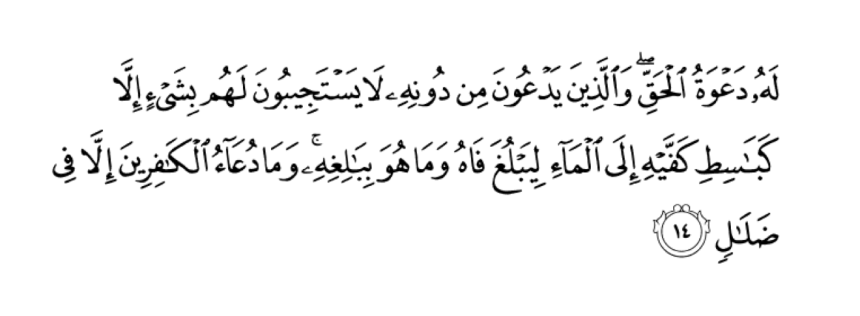
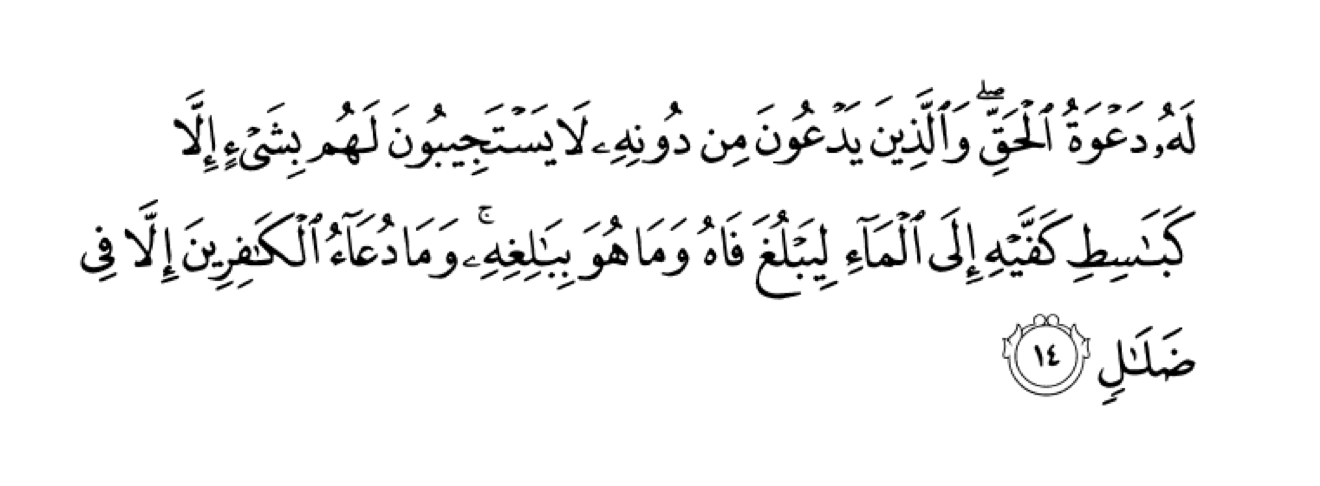
Unto Him is the Call to Haqq. And those they call upon besides Him do not respond to them with a thing, except as one who stretches his hands toward water [from afar, calling it] to reach his mouth, but it will not reach it [thus]. And the supplication of the disbelievers is not but in error [i.e. futility].
# 61: The Essence of al-Jamea-tus-Saifiyah

(In reply to Husain Qutbuddin’s Youtube video)

Though grudgingly acknowledging al-Jamea tus-Saifiyah’s value, Husain downplays the importance of him and his siblings not having attended Jamea. He states that because they were tutored by al-Dai al-Ajal Syedna Mohammed Burhanuddin RA and Khuzaima directly, it was unnecessary for them to affiliate with Jamea since they accessed Ilm Aale Mohammed SA at its source.

This is why he is wrong.

Al-Jamea-tus-Saifiyah: Ideal and Concept

Nothing encapsulates the concept and ideal of Jamea better than Syedna Mohammed Burhanuddin’s profound statement: Jamea mari zaat che (Jamea is my entity, my being, myself). This eloquent sentence merges two separate but interrelated standpoints. Firstly, this sentence shows us that Syedna Burhanuddin’s zaat mubarakah, his entity and being is Jamea, which means “all encompassing”. Every aspect of Dawat Hadiyah, be it belief, knowledge, practice or character is represented in his thoughts, words and actions. Furthermore, his entity is such that it assimilates all Mumineen within itself, becoming a sanctuary for them all. This very ideal of encompassment and assimilation is embodied within the institution, Al-Jamea-tus-Saifiyah both in its physical structure and within the thoughts, words and actions of the Mumineen that adhere to it. Every Mumin in this regard is part of Jamea.

Syedna Mohammed Burhanuddin RA: Mufeed Aalaa (Prime Preceptor)

Therefore, Syedna Burhanuddin’s association of his pristine and pure being with this institution is testimony that regardless of direct means of tutelage, he is in fact the mufeed aalaa (prime preceptor) of all that study in Jamea. This is the belief of every student and teacher within the institution. It is only Moula’s faiz that nourishes Jamea and no other institution is accorded this privilege. Only the ignorant would differentiate the entity from the institution. If instruction depended on the merit of individual teachers, then the vile four manaahis (dushmano in the guise of teachers) would have corrupted generations of students, but they could not. This is because Moula’s faiz was reaching students regardless of whatever poison they oozed out within the environment. Similarly, Khuzaima and his children have given many asbaaq to many Mumineen but not all who heard their babble were corrupted by them. On the other hand, Syedna Taher Saifuddin RA personally tutored Shaddaad (one of the four manaahis) but this direct tutelage did him no good. Fresh spring water filled into a dirty vessel will become dirty, while the same, even if flowing through countless channels will benefit when it reaches a clean vessel. The distinction is obvious.

Actions Speak Louder Than Words

Even If they were direct beneficiaries of Syedna Burhanuddin RA as they claim, they certainly were not the only ones. Many of their peers despite their direct tutelage chose to, or were advised to, study at Jamea. If this were unnecessary why would they have done so? If Syedna’s Burhanuddin’s direct mustafeeds (students) could attend Jamea, then students of other personages below him should have had no objection doing so. Even if we overlook this issue and take their word at face value, that Husain and his siblings had imbibed what they claim to have imbibed from the wellsprings of Ilm Alle Mohammeed SA, why is there still no sanctity for Jamea, no linkages or affiliation to it seen in their actions. If they have indeed benefited from proximity to Syedna Burhanuddin, the embodiment of Jamea, why are their contributions to his institution next to nothing? Their privileged tutelage would have dictated that they participated within Jamea if not as students than as contributors or leaders.

Absence from the Shafahi Imtehaan

Husain’s father was one of the first to sit for the shafahi (oral examination) of Jamea. Why were the bulk of his children so conspicuous in their general absence from it? Especially, since there are many from the Qasr Aali who participate even if they are unable to undertake full time study? Being seated in front of the Dai al-Zamaan, where the voices of past Doat resound and benefitting from a privileged opportunity of presenting one’s belief, one’s ikhlaas, and one’s tasawwur to Moula is the ultimate honour. That is why all categories of Mumineen are allowed representation and participation in that sacred space. Their so called proximity, privilege and learning should have demonstrated exemplary performance there. Instead, their recurrent absence spoke volumes about their true beliefs and intentions. This is evident when Husain speaks of his father’s pride in attending his Cambridge convocation but that same father denied the bulk of his children the greater honour of participating in the shafahi imtehaan in front of Syedna Mohammed Burhanuddin RA.

Learning to Serve

Husain and his siblings, who claim distinction in deeni and secular knowledge, could have rendered service to Jamea in many other ways as well. Not that Jamea needs them, but they could have taught, delivered lectures, helped in curriculum implementation, improved pedagogy etc. They chose not to.  Those who were truly close to Moula and benefitted from his teachings seized every opportunity they could to work for the development of the institution. With the level of sincerity and perceptivity that they claim they have, should they have waited to be told to affiliate themselves with Jamea or should they have come forward to serve? Is the fact that none of them were ever told by Syedna Burhanuddin to join Jamea directly in their favour or against them, while at the same time he was encouraging others in his household to do so? If they claim that ‘Jamea’ prepared and instructed them, then after such maturity how did they render ‘Jamea’ service? If they claim that such affiliation or service is unnecessary, then they have never affiliated themselves with Jamea at all, neither with the Syedna Mohammed Burhanuddin nor with his institution.


#60: In Khuzaima We (dis)Trust

(In reply to Husain Qutbuddin’s Youtube video)

Husaain Qutbuddin states:

       To be Mazoon Mutlaq means to enjoy complete authority. Such complete authority must mean investment of complete trust by the Imam and his Dai. If such complete trust has been invested, then his word is absolute, he cannot stray.

Judging by the variety of fallacies presented in his videos, this definitely appears to be one area where he can claim irrefutable mastery in. Here, a crafty slippery slope is provided in which the rhetorical torrent of cause and effect might obscure a weak mind.

The Mazoon is limited by the authority and delegation of the Dai. If he had such complete authority as Husain claims, what would be the difference between the two entities? Khuzaima did not enjoy unlimited, unaccountable freedom in Dawat matters. But for argument’s sake, even if he did, it means that he was expected to serve effectively and efficiently, possibly more so than any saheb or Mumin below him. It does not mean that he was being trusted to the extent that he could not err or his word could not be questioned by the Dai. Trust and fallibility are two separate and distinct concepts. Even if trust in him was absolute, for argument’s sake, it did not make him infallible, which is exactly what Husain is hinting at. He is equating trust, even absolute trust with infallibility. If trust is broken it is because a human being is by nature and essence fallible, even if appointed by a Dai. This is very obvious because humans are imperfect and flawed. All throughout our lives, we trust people with major and minor responsibilities, yet at times our trust is betrayed. For example, husbands trust their wives completely in their personal lives but at times they betray that trust, and vice versa. Clients trust lawyers completely for their cases but they have been known to abuse their powers. Covenants of trust are known to be broken because human beings are by nature fallible. In Dawat al-Satr only the Dai is infallible. Khuzaima was, and definitely is, not.

An incident occurred in 1409 H where the covenant of trust between him and his Moula was definitely breached and though Husain would like us to forget, we know that Khuzaima’s character emerged quite tarnished, to say the least.

Al-Dai al-Ajal Syedna Mohammed Burhanuddin RA proclaims.

“ek waqt Bhai Qutbuddin ney bhi em khayal thai gayu, aney em yaqeen thai gayoo, aney zehn ma lai leedu key aa saazish….”

Maybe Husain has some retort regarding how our eyes are shut and our intellect is jaded regarding this immaculate proclamation as well.

#59: No Comparison

(In reply to Husain Qutbuddin’s Youtube video)

All throughout his banter, Husain Qutbuddin would not have us reflect on fundamentals and have us focus instead on incorrect historical analogies and skewed character analysis. Lets look at a couple of examples.

He states:

What’s happening right now is similar to Rasoolullah’s initial establishment of Islam. Only three individuals were with him at its inception, so only a few Mumineen today is acceptable. Majority is not a proof of haqq. The Quran has chastised the majority in many instances. Isn’t this analogy logical etc etc?

Why this is false? First of all, even if any parallels were allowed between Rasoolullah SA and Khuzaima, all the premises and analogies drawn by Husain are proven inappropriate upon reflection.

Early Islam

Rasoolullah SA was establishing a whole new religion amongst a community of polytheists (mushrekeen). He was asking them to leave idols they had worshipped for centuries if not millennia. Is Khuzaima establishing a new religion different from what his predecessor espoused? Are we being asked to convert to an entirely different religion? It is understandable that at the onset of Islam conversion would take place gradually. This has been the case with all previous Anbiyaa Kiraam SA that introduced a new shari’ah, Musa Nabi SA and Eesa Nabi SA, for example. Therefore, the analogy of Khuzaima’s clan resembling followers of early Islam is misleading, as is the analogy that Mumineen believing in Syedna Mufaddal Saifuddin TUS resemble those Mushrekeen who would not even listen to the Quran Majeed. The messages of the Quran Majeed might have been new to Mushrekeen but the parameters of a valid nass have been known to Mumineen for over 1400 years. They know that nass should be attested by witnesses in private or should be publicly proclaimed, and, hence, have no reason to pay heed to a claimant that has not even a shred of proof for his appointment, apart from his word. Even if his word was above question, which it is not, it is not nearly enough to hold credence. Therefore, Mumineen are justified in refusing to hear Khuzaima’s banter on the basis of their knowledge and the virtue of their righteousness.

Ameerul Mumineen after Rasoolullah SA

Husain would also like us believe that Khuzaima’s clan today resembles the followers of Ameerul Mumineen after Rasoolullah’s demise. This is not true because, around that time, a clear distinction was being formed between being Muslim and being Mumin, which was not so apparent in Rasoolullah’s time. After his demise, there was a repetition of what had taken place in the period of every wasi, prior to Ameerul Mumineen. Every ummat would disobey their nabi’s instruction of staying true to his wasi, and only Mumineen, the privileged and chosen few, would follow him. The majority of the nabi’s ummat would betray his wasi and therefore bore the brunt of Allah Ta’ala’s disdain as stated in the Quran Majeed, which criticises and chastises this majority of disbelievers.

However, Mumineen in satr are already within the haram (sanctuary) of emaan. Since Ameerul Mumineen’s time we have always been a minority within the larger Muslim majority. However, this does not mean that being a minority itself is proof of haqq as Husain would have us believe. Over 1400 years there have been many splinter groups within Mumineen who were minorities in respect to the majority of Mumineen. This does make them righteous. Aligning to haqq has never been a competition of who has the smallest group of people supporting him. It might be poor reflection on the efforts of all our Hodaat Kiraam SA over a period of 1400 years if suddenly overnight only 70 odd individuals stayed true to haqq from a community of several hundred thousand. If being a majority is by itself not proof of haqq then neither is being a minority proof of such. This false premise leads to these false analogies: Rasoolullah SA had few supporters. Imam Husain SA has 72 shohada and so on. Because of such comparisons, a weak mind might be duped into thinking that being few in number, on its own, is a sign of righteousness.

Reason # 58: Husain Qutbuddin’s Intellect: To See or not to See

(In reply to Husain Qutbuddin’s Youtube video)

Husain constantly appeals to intellect and reason assuming that the several hundred thousand followers of Syedna Mufaddal Saifuddin TUS are not doing the same. Now that their lifeline of whimsical evidence is proving deficient,  they have resorted to smoke and mirrors. Husain tries to purport the use of intellect and reason as a red-herring and diversion from the truth. He has brought out the age-old dusty suit of the ‘the place of intellect in religion.’ However, his mistake is he assumes that members of the Dawoodi Bohra community do not adhere to logic, reason, and intellect in their own individual understanding of religion.

The bulk of his argument suggests that his listeners should use their intellect and draw conclusions solely based on the information he has provided for them as the premise.

Thus, finding the flaw in his proposition is not difficult.  The primary flaw, or deception if you like, lies in his premise and the options that he sets for his listeners. He gives his listeners a limited amount of information and then tells them to now connect the dots based on the fragmented evidence he has provided.  Drawing lines between four dots can only make a quadrilateral. Therefore, what requires more intelligence and true use of intellect is questioning why the dots are placed this way in the first place. Who placed them there? Why should one connect them from left to right rather than right to left?

By exploiting the gaps of information provided, it would appear that Husain does not want his listeners to engage in such reflection because he realizes that his arguments lack merit under any actual scrutiny. This is mainly due to the fact that neither himself or his entire family have provided a shred of evidence why all of Syedna Mufaddal Saifuddin’s TUS multiple conferrals of nass are not valid. He aims to cast doubt on some while hoping that one might forget about the recurring other instances of nass. He is playing the game of ‘fit the historical analogy in its right slot’, or ‘lets choose which character analysis we like best’. Repeated witnessed historical events can’t be taken out of the equation. So, instead I ask Husain whether he has an attested document, or witnesses, or a mere public proclamation in favour of Khuzaima’s claim. Do any one of his examples equal up to those that clearly place Syedna Mufaddal Saifuddin TUS as the 53rd Dai al-Mutlaq?

Guidance from Dawat Texts

Let us turn to the Books of Dawat, as any reasonable person would do, to find proof. For an appointment by nass, the books of Dawat only provide two possible accounts: A witnessed private appointment with or without documentation and a public proclamation. Both accounts stand true and have occurred more than once for Syedna Mufaddal Saifuddin TUS. (See Reason #56).

Husain knows this and wishes that we will forget that although the intellect is a powerful tool given to us by the Almighty, in regards to choosing haq na sahib, Moula, we are not meant to use our intellect as a proof of his maqam and nass.  Syedna Hamiduddeen RA , in Kitab al-Masaabeeh written in the era of Imam Hakim, relates many arguments which disallow the umma (the religious community) to choose a rasool or an imam with their intellect. Firstly, we are lacking in all the knowledge needed by an imam to ascend to the maqam of imamat. If we do not have that capability ourselves, how can we appoint someone to this post? If we do not have authority to appoint individuals to lesser posts like judges etc, then how could we claim to appoint someone to a post greater than that; the imamate? Moreover, the imam must be maasoom, and since being maasoom is not a physical distinction that would make the masoom sahib known, it would lead to follow that only Allah or another masoom sahib, his predecessor, should be able to do so.

There are many more such arguments like this one in various other Dawat texts. Therefore, the call to reason and intellect to acknowledge haq na sahib, is not something that can be argued from a true Fatimi theological or philosophical point of view.  While reason and intellect are our utmost important tools, they still can’t be utilised in determining haq na sahib. That determination must be done by the predecessor of the successor and this is the main reason that nass is conferred among witnesses and publicly proclaimed as well – solely for the fact that our human reasoning and intellect are not universal and they are subject to change due to exterior circumstances – such as cosmography. There is no sidestepping this fact. Husain either has forgotten this or knows but he would rather his audience be ignorant of these fundamentals and focus instead on incorrect historical analogies and skewed character analysis.

« Older Entries