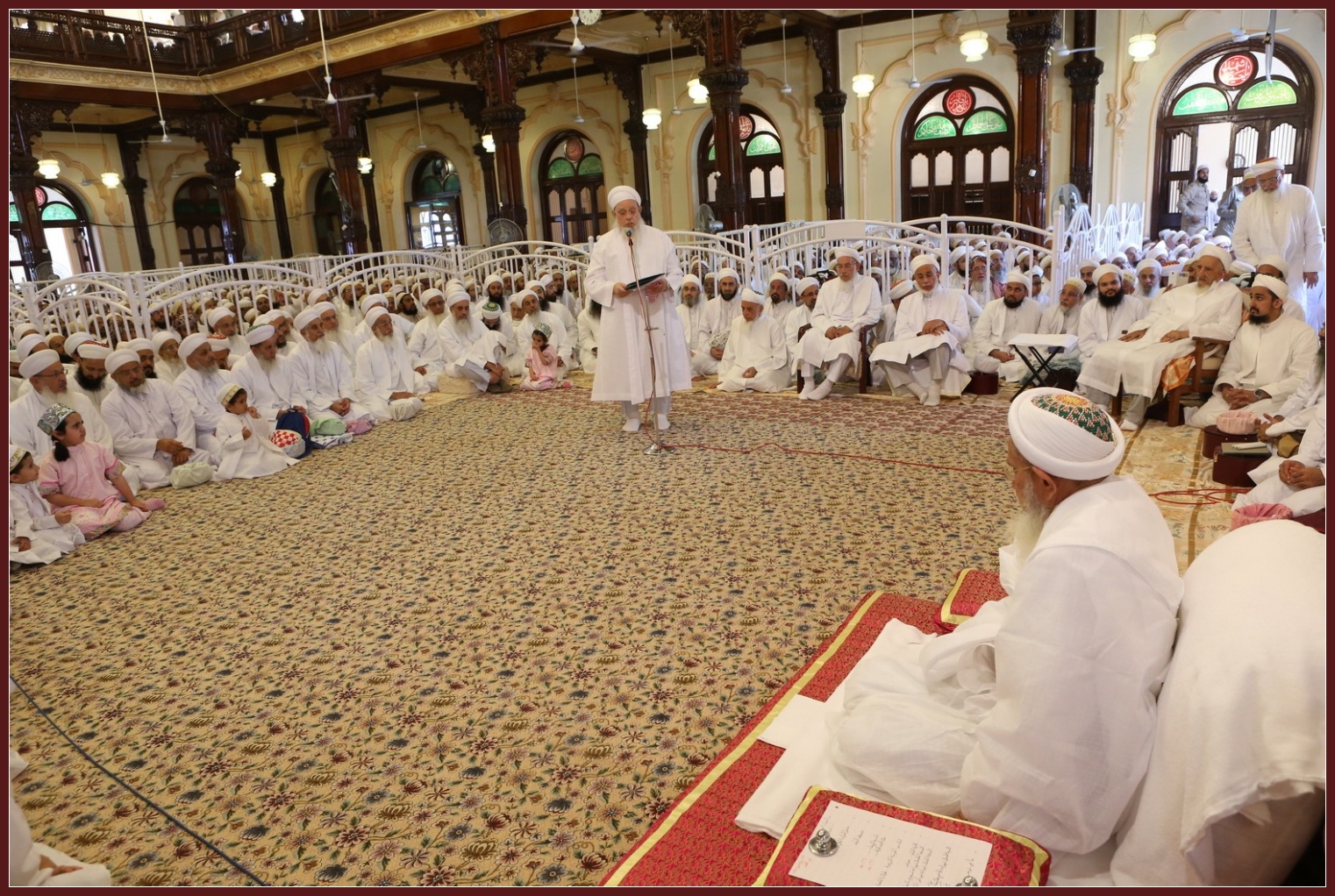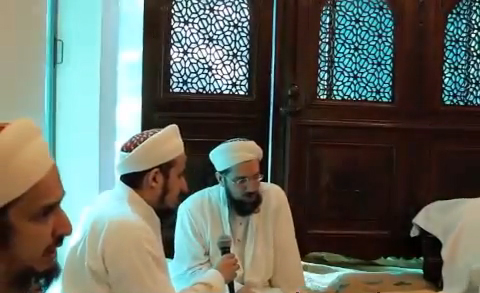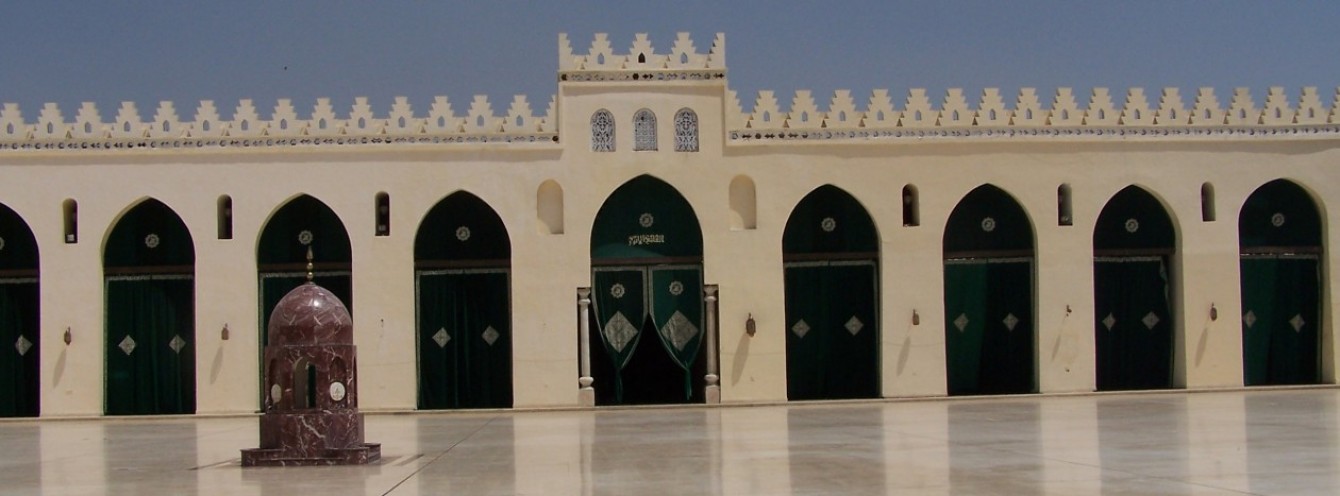
Reason # 38: Syedna Burhanuddin RA as our Bawa Shafeeq: Lessons to his children

(Another Lawyer’s Perspective- received externally).

Many mumineen refer to Huzurala (TUS) as  Bawasaheb or as the Bawa Shafeeq of the mumineen; Aqa Burhauddin RA served Imam-uz-Zaman for 50 years, teaching us to follow Sirat-al-Mustaqeem with his fatherly affection. 

No one who claims to be a follower of Syedna Mohammed Burhunuddin would dispute that that he was indeed our Bawasaheb. Every moment of the last 50 years was spent in the tarbiyat of mumineen.

Khuzaima Qutbuddin even acknowledges on his website (when discussing the position of the Mazoon as the mother of mumin), the Dai is like the father of a mumin (see reason #1 for a more detailed comment on this point).

In various conversations over the years with Khuzaima’s family, I can recall only a few instances where they quoted or pointed to any bayan or teaching of Aqa Burhunuddin RA. Almost all of their “deeni” experience and knowledge stemmed from what their (physical) father, Khuzaima, had taught them; either from Khuzaima’s own actions and or his interpretations of hidayat from his own father, Syedna Taher Saifuddin RA. But this is not in itself a sign of their fitnati nature. One can reasonably expect that children will wholly imbibe and absorb  what they learn from their tarbiyat.

 So the question for Khuzaima to answer is: What sort of father and Bawa Shafeeq does he think Syedna Burhnauddin was? Because Khuzaima’s version of events around nass, and the alleged conspiracy of Syedna Burhanuddin’s immediate family betray his hollow words and the hypocrisy with which he viewed Bawasaheb RA’s fatherly tarbiyat towards his physical and spiritual children.

We know the Shazadas have received tarbiyat directly from Bawasaheb Burhuniddin RA, and be surrounded by his teachings, his hidayat, his noor, and his Imaami mission — in the same way that Khuzaima’s children drank from the fountain of his fitnat as they were growing up (and into adulthood).

 If we hypothetically (may Allah Ta’ala protect us from such falsehoods) accept Khuzaima’s version of events, there are only two distinct possibilities:

1) The Shazadas did not know that Syedna Burhunddin had done nass on Khuzaima (or anyone else). They manipulated events to “invent” nass on Syedna Mufaddal Saifuddin (“Scenario 1”)

Scenario 1  requires us to believe that despite the close proximity to Bawasaheb Burhanuddin RA, and the detailed and affectionate care with which he raised his children – ALL of the Shazadas are capable of abandoning the central tenant of Islam; that every Imam *must* proclaim nass on his successor before departing this world, and in Zamaan-as-Satr, every Dai has obligation to proclaim nass on his successor.

It boggles the mind as to how Khuzaima has the inclination to even allege the Shazadas believed their own father had failed in his supreme duty to perform nass and they took advantage by inventing the nass on Syedna Muffadal.Khuzaima wants us, in order to accept his claim, believe that  Bawasaheb Burhunuddin RA, failed to teach this most basic tenant to even a single one of his own children. This is the same Bawasaheb who was charged by the Imam to provide tarbiyat to all ibadullah and be the father for all mumineen.

2)      The Shazadas knew (either directly or indirectly) about nass on Khuzaima, and manipulated events to damage his claim (“Scenario 2”)and move the people towards Syedna Muffadal.

Scenario 2 betrays even more ridiculous slander from Khuzaima towards Syedna Burhunuddin RA.  It would mean that Aqa Burhunuddin failed to teach any of his own children of the never-ending silsila of nass, and that no one can prevent the rightful mansoos from the dawat of Islam. Le’in Yazid and the maloons of Karbala could not cover up the chain of nass; Imam Ali Zainulabedin continued to provide light in those days of darkness.Khuzaima wants to us to think that Syedna Burhanuddin’s RA constant aza’ dari and hidayat to remember Imam Hussain SA were wasted on his own children – as the Shazadas feel they are capable of breaking nass and extinguishing the Imaami light in the days of Satr. Aqa Burhanuddin RA spent decades teaching mumineen about Imam Hussein SA and the meaning of his sacrifice, as the core message of Islam and Imaan. But Khuzaima wants us to believe that Syedna Burhanuddin RA yet failed to teach his own children that very same message.

 Of course, there is a third possibility that some of the Shazadas were innocently misled and led astray by their more “astute” brothers. This possibility can be discounted by anyone who has had a conversation with any of the Shazada Sahebs. They are all different in nature; some have a greater sense of irony, others a greater sense of humour, some are extroverted, and others are more introverted, some like to play sports, others like to watch sports. But they are all, without a shadow of a doubt, very intelligent and extremely capable men. Even Khuzaima indirectly acknowledges their capabilities by alleging them to have led such a massive and intricate plot against himself. So the possibility that some Shazadas have been led innocently astray by others can safely be labelled as delusional fantasy.

Clearly, Khuzaima does not think much of Aqa Burhuddin RA as a Bawa Shafeeq; as extending Khuzaima’s logic means if Aqa Burhanuddin RA couldn’t even teach a single one of his children about the core of Islam and Imaan; how could he have taught the world? Clearly, he has no regard for the tarbiyat under which mumineen have flourished in the last 50 years.

 Well, Khuzaima; I have a lesson for you; I am my fathers’ son – whether it’s my father in a spiritual or physical sense – and although you may have failed to provide the right tarbiyat and guidance to your children, both my ruhani Bawasaheb and my jismani father did teach me. And your hypocrisy and disdain towards Bawasaheb Burhunuddin’s role as our father just proves that you could never be anyone’s spiritual bawasaheb!
Reason # 37: 15 Years Ago….

(received from an external-source)

Imamuz Zaman’s Salgira – 15 Years Ago 

A Testimony By An American Bhai

In 1998/1419 H. Aqa Moula Syedna Mohammed Burhanuddin al-Hayy al-Muqaddas visited Dallas, Texas for the Iftitah of Saifee Masjid. My father, Dr. Sh. Hussamuddin (al-Marhoom), had received the sharaf of Aqa Moula al-Hayy al-Muqaddas’s utara mubarak when Aqa Moula RA had come to Dallas for ta’sees two years earlier in 1996/1417 H. In preparation for the visit to Dallas for the masjid’s iftitah and with the hopes of receiving the sharaf of utara once again, both of my parents had done extensive preparation in their home for Aqa Moula’s RA arrival. However, the day before Aqa Moula RA arrived to Dallas, Dr. Moiz Bhaisaheb decided that our house was a little far from masjid and mumineen would benefit more in the safr if Aqa Moula’s RA utara was nearer to the masjid.

At that moment and despite the logical decision, we were naturally shattered and heartbroken. We felt like our numerous prayers and vows, our pleas had all been crushed. At that time – as we always did – we took Aqa Moula Syedna Mohammed Burhanuddin’s TUS wasila mubarak. We were told that we had the sharaf of Syedna Mufaddal Saifuddin’s TUS utara and Shehzada Aali Waqar Ammar Bhaisaheb’s utara together. My parents, however, were still saddened – and at the time were not fully aware of Aqa Moula Syedna Mufaddal Saifuddin’s TUS maqam.

However, despite not receiving the sharaf of utaro, Moulana Burhanuddin RA gave us more than we could ever ask for. On the day of the masjid’s iftitah, Syedna Mufaddal Saifuddin TUS called me and told me to find my father. When I couldn’t find him, he told me to tell my father that on the ziyafat thaal that afternoon, Syedna Mohammed Burhanuddin TUS had decided that he would perform Maghrib-Ishaa namaaz on the night of Imamuz Zaman’s Salgira at our house. Aqa Moula TUS, from his previous visit, remembered the size of our backyard and said that all Mumineen should attend namaz. Syedna Mufaddal Saifuddin TUS then told me, “I did not do araz to Moula RA to do so, rather Moula RA said this himself.” He repeated this to me again and told me to quickly inform my father. We felt honored that despite there being a new masjid in our city, we along with thousands of Mumineen would receive the barakat of namaz at our home. Throughout our lifetimes we have seen that Moulana Mohammed Burhanuddin RA had the ability to uplift our spirits when we were at our lowest points – and this he could do with just one smile. However, we were yet to come to know the extents of the ihsaanaat of Aqa Moula Syedna Mohammed Burhanuddin RA.

On the night of Imamuz Zaman’s Salgira, after Aqa Moula RA performed and led maghrib and ishaa namaaz in front of several Mumineen our ziyafat began with the women of my immediate family privately doing qadm bosi in the room with Syedna Mufaddal Saifuddin TUS, Aisaheba, Shehzada Ammar Bhaisaheb Jamaluddin, Zahabiyah Baisaheba, Shehzadi Ruqaiya Bhensaheba, Zahra Bhensaheba, and Shabbir Bhaisaheb.  One by one, everyone did qadam bosi and then my mother did. She began to cry as she was near to Moula RA. Moula RA placed his hand over hers, and asking my father, said “Tamne bhaari tow nathi lagu ke maru tamara yaha utaro na theiyu?” My father, gesturing towards my mother replied, “Moula, aa ne thoru bhari lagu che.” Aqa Moula Syedna Mohammed Burhanuddin RA looked at my mother and while smiling said,

“Kem, Bhai Mufaddal Nu Tow Utaro Theiyu…”

My father, mother, and three brothers, as well as the other above mentioned  sahibo were present in the room at that time and witnesses to this sentence. Considering that there was more than one Shehzada staying at our house at the time and also that Aqa Moula Syedna Burhanuddin RA had given us the azeem sharaf of Imamuz Zaman ni Salgira ni Raat ni Namaz as well as ziyafat, we all immediately knew that this sentence was an ishaara to Syedna Mufaddal Saifuddin’s TUS aala shaan. Aqa Moula RA compared his own self to his mansoos, Syedna Mufaddal Saifuddin TUS and chose to reveal this on the night of Imamuz Zaman’s Milad in 1419 H. He indicated that his presence in our home was at the same maqam as his own. He entrusted our family with this ishaara and this perhaps is the biggest sharaf that we could have ever expected and ever experienced in our entire lifetime. Fifteen years later, I am most happy to share this with everyone who might read this. Khuda Taala hamara Moula ane Aqa Syedna Mufaddal Saifuddin TUS ni Umr Shareef ne Qiyamat na din lag baqi rakhjo. Ameen.

M. Ali Asgar Sh. Hussamuddin

Reason # 36: The Illustrious Histories of Past Mazoons AQ In Da‘wat – True Paragons of True Khidmat

From an anonymous source

“…and it was later disclosed that he never took history seriously”

The 51st Dai Syedna Taher Saifuddin RA during the latter part of His reign used to spend hours in His late night asbaak (discourses) describing the history of Dawat to the young and old alike. His Mawaiz (sermons) and elegies of Du’at Mutlaqeen RA and their Hudood Kiraam expounded and depicted the history of the Da’wat during the Yemen and Hind period in minute detail. His biographical notes, philosophical and theological analysis of important events of the Dawat Fatemiyah as published by him in his Rasail Ramadaniyah are testimony to the emphasis placed by him on the importance of gaining “Noor” and illumination from history. The cost of ignoring history lessons in a religious context can be perilous indeed.

Let’s take for an example the account of the four sons of the 41st Dai. The eldest, Syedi Shaikh Adam Safiuddin AQ was appointed to the high office of the Mazoon and served as such with much ikhlas and humility throughout the tenure of his father. His father selected a younger son (the 42nd Dai Syedna Yusuf Najmuddin RA) as His successor and the eldest continued to serve his younger brother as expected from him. That brother selected and groomed another sibling (the 43rd Dai Syedna Abdeali Saifuddin RA) for the high office of the al Dai al Mutlaq. The eldest maintained his position as Mazoon and performed his duties with love and affection as before. The third brother selected another brother, his Mukasir (Syedi Abdul Qader Hakimuddin AQ) to succeed him and the Noble Mazoon never swerved in his dedication as before. Not even when that Mukasir died; and his brother proclaimed that he would find the most noble, most learned of all men to replace His mansoos and overlooking him, the Lofty Mazoon, selected two young men from a different family (the 44th Dai Syedna Mohammed Ezzuddin RA & the 45th Dai Syedna Tayyeb Zainuddin RA) and groomed them to succeed him. With a lineage as impressive as his (His father, grandfather and his forefathers were Duat Mutlaqeen RA) could he but do otherwise? With the concept of sacrifice and tafadi instilled in him since birth, could he aspire but to do his utmost to serve His Maula, the Dai of the Age in any way but that of His choice?

The Eminent Mazoon that he was, he continued to serve the two young men selected to be His Maula by his own younger brother, one after the other till His last breath. He is the only Mazoon in the history of the Dawat Fatemiyah to have the distinction of serving five Duat Mutlaqeen. His legacy of ikhlas and service continued on in the form of his illustrious son, Syedi Hebatullah Jamaluddin AQ who was appointed to the position of His father and went on to serve 3 Duat Mutlaqeen in his turn. The two Mazoons between them served seven Duat Mutlaqeen and their correspondence (recorded for posterity in the Rasail Ramadaniyah of the 51st Dai Syedna Taher Saifuddin RA) illustrate their beliefs and sincerity in serving the Duat Mutlaqeen RA, seeking their permission for mundane private and official matters. They never claimed to share any spiritual authority or divine inspiration (ilham) with the Du’at Mutlaqeen and always sought their forgiveness and blessings (which also demonstrates the spuriousness and hollowness of the ex-Mazoon’s present tall claims of having full and absolute raza).

Of all the 56 personalities that adorned the High station of Mazoon (that this scribe could locate) two stand out like a sore thumb; Ali bin Ibrahim & the present ex-Mazoon Khuzaima Qutbuddin. Ali bin Ibrahim’s followers (the Alawi Bohras) claim that he never served as the Mazoon of the 29th Dai Syedna Abdul Tayyeb Zakiuddin RA since he claimed that position (the rank of the 29th Dai) for himself. To justify his claim that “The Dai only appoints as Mazoon one who is a true embodiment of imaan and one who he trusts implicitly”, the present Muddai will undoubtedly have to explain the anomaly in the case of Ali bin Ibrahim by either claiming esoteric knowledge hidden from others or by championing the false belief advocated by the Alawi Bohras that Ali bin Ibrahim wasn’t appointed to the position of Mazoon (a belief refuted by all Dawoodi Bohras and attested to in our books for more than four centuries). In any case he will surely repudiate and reject historical facts in lieu of his whimsical and farfetched interpretation.

Since the so called all knowledgeable ex-Mazoon Khuzaima Qutbuddin has decided that history books are only zahir texts and not to be taken seriously and things like nasse jali too obvious and straightforward to be accepted by the intellectuals; and suddenly identified the need to debate obscure things begging for esoteric explanations like notions of the legitimacy of private nass on social and public media, our beloved Aqa Maula Syedna Mohammed Burhanuddin’s RA oft repeated statement shines like a bright and radiant light. Al Akhbaaro Anwaar. Our historical reports and narrated traditions are sources of enlightenment.

When all else fails to permeate doubt, studying our history reveals the true embodiment of Imaan in the person of Syedna Mufaddal Saifuddin TUS who was elevated to the highest position of all by the all discerning eye of Syedna Mohammed Burhanuddin RA, who personally supervised the upbringing of His beloved son and successor and wrought unto us a perfect example of humility and ikhlas; devotion and sacrifice; an angel like no other. One who has never had to lay claim to any of the qualities or virtues that the ex-Mazoon asserts that he and only he possesses (as he unflinchingly and brazenly keeps on reminding us).

And since he shuns all things self evident and clear (as zahir and jali) as they may be… it will surely be said that he never took history seriously to the peril of his soul and all who follow him blindly.

Historical Note:

Risala Sharifa Barakato Ashabet Tatheer (1380) Pages No. 358-389

The demise of Syedi Abdul Qader Hakimuddin’s AQ, brother, Mukasir & Mansoos of the 43rd Dai Syedna Abde Ali Saifuddin RA is narrated in detail. Excerpts from the Risala composed in “Na’ye” illustrate the high position of the deceased. Syedna Saifuddin RA composed an elegiac composition in which he promises that he would fill the void created by his Mansoos’s demise by appointing the most truthful and knowledgeable amongst all to the position vacated by his brother. He later prepared Syedna Mohammed Ezzuddin RA & Syedna Tayyeb Zainuddin RA for the position of al Dai al Mutlaq. His Mazoon, Syedi Shaikh Adam Safiuddin AQ, himself a great scholar, continued in his position to serve both Moulas selected by Syedna Saifuddin RA. The fact that he served five Duat Mutlaqeen as Mazoon and was present when others were described as being more knowledgeable and truthful, illustrates the point that albeit the position of Mazoon is the second highest rank, it is possible for others to be present who might be worthier in spiritual merit and all values and traits suitable for the incumbent of the rank of Dai. No holder of the position of Mazoon has ever claimed that they possessed the highest shaan in Dawat after the Dai in anything except the rank before now and that the authority of the position (without supporting proof) itself was evidence enough in all religious dictums.

Reason # 35: The Perspective Of A Lawyer

On January 24, 2014, within a week of the demise of Syedna Mohammed Burhanuddin al-Hayy al-Muqaddas, Khuzaima Qutbuddin and his children sent a message to me and others stating that he is “the sole Trustee of all the Wakfs/Trusts of the Dawoodi Bohra Community.” He went on to warn that if anyone deals with the properties of the Dawoodi Bohra Community without seeking his permission he/she does “so at his/her own risk.”

My first thought when reading this message, is “could any mumin, moreover a self-proclaimed spiritual leader be really talking about who owns what only a few days after the demise of our beloved Moulana RA?”  After having that first thought, it immediately struck me, “so that is what Khuzaima Qutbuddin is after – material wealth and gains.”  Khuzaima Qutbuddin’s attempts to usurp the properties that were rightfully entrusted to Moulana al-Hayy al-Muqaddas as the 52nd Dai, has proved to me that all of his actions leading up to now have been for the ultimate goal of garnering power and property – not for guiding mumineen down the rightful path – not to improve our understanding of Rasulallah’s SA Shariat – and certainly not to perform the khidmat of Imam uz Zaman SA. Otherwise, how could his first message of Da’wat to mumineen be about his ownership of wealth? 

In regards to Khuzaima’s claim that he should be the sole trustee of all the property of the Dawoodi Bohra Community, I would like to say a few things.  First off, it is absolutely true that the the Dai ul Mutlaq, sitting in the seat of Imam uz Zaman, is the sole trustee of the properties of Dawat. This statement is understood from both a deeni and legal perspective. However, as stated in the various reasons that I have read just on this site, the only logical conclusion any person could reach based on the evidence is that Burhanuddin Moula RA did Nass on Moula Mufaddal Saifuddin TUS. Therefore, from a legal perspective, the sole trustee of the properties of the Dawoodi Bohra Community is unequivocally the 53rd Dai, Syedna Mufaddal Saifuddin TUS.   

Moreover, from a legal perspective, Khuzaima could never fulfill the requirements imposed on a trustee.  Basically, a trustee is charged with the responsibility of managing the trust assets for the sole benefit of the beneficiaries.  When the law says “for the sole benefit of beneficiaries” it means that the trustee must be completely loyal to the beneficiaries. This includes the avoidance of any self-dealing or self-gain in connection with managing the trust property. In my opinion, based on Khuzaima’s history of dealings (or self-dealing) there is no way that he could fulfill this requirement. 

Many examples exist of Khuzaima’s historical self-motivated dealings that were contrary to the wishes and teachings of Moulana al-Hayy al-Muqaddas RA exist. I would like to provide one example that might be fairly unknown to most people. The San Jose Jamaat is currently in the process of building a Masjid with the permission of Syedna Mohammed Burhanuddin RA and Syedna Mufaddal Saifuddin TUS. This permission was granted by Burhanuddin Aqa RA himself in London. At that time, Burhanuddin Aqa TUS was not able to travel to San Jose to perform the ceremonial laying of the foundation. The ceremonial laying of the foundation, known as ta’sees, is a rite solely entrusted to the Dai ul Mutlaq as the sole trustee of the properties of the Dawoodi Bohra Community. The Dai ul Mutlaq can choose to perform the ta’sees rite himself or can delegate authority to perform the rite to anyone he chooses. At the time permission was granted for construction of the San Jose Masjid in London, Burhanuddin Aqa RA chose to perform the ta’sees rite himself in London.  Soon after, construction of the Masjid began with the laying of the concrete foundation. Once the foundation was laid, Khuzaima visited San Jose and even though he knew that Burhanuddin Aqa had already performed the ta’sees of the Masjid, he proceeded to have a hole dug in the existing foundation and perform his own separate ta’sees of the Masjid. Why would Khuzaima knowingly perform a rite that only the Dai ul Mutlaq is entrusted or to whom he entrusts with performing as the sole trustee, after he had performed the rite already himself? What were his reasons? Once the ta’sees was performed by Moula RA why would there ever be a reason for a second rite to be performed? His message about the properties of Da’wat which were sent to us (see above) explains why. Khuzaima has long had the intention to usurp the properties of Dawat for self-gain and steer mumineen away from Syedna Mohammed Burhanuddin al-Hayy al-Muqaddas.  In committing acts like these, Khuzaima Qutbuddin and his children have showed that he could not honor the sanctity of the Dail ul Mutlaq’s rights as the sole trustee of the Dawoodi Bohra Community in his lifetime. So I pose the question, how could he ever fulfill the role as the trustee himself?

A Lawyer In America

Reason #34: Doubt Cannot Undermine Conviction

Qutbuddin and his kin have made a mockery of Dawat, its texts, and its institutions: the foremost being the institution of nass. This has always been the way of those who have opposed haq na saheb.

The last fifty years are testimony to al-Dai al-Ajal Syedna Mohammed Buhanuddin’s RA dedication to Imam al-Zaman’s Dawat and the exemplary manner by which he looked after the amaanat he had been given.  Burhanuddin Moula RA was diligent; his each and every action and statement was for the sake of Dawat and the betterment and protection of Mumineen. This reflects most apparently in the manner by which he proclaimed nass. Throughout his life, on multiple occasions, with different witnesses and in different manners, both explicit and implicit, Syedna Burhanuddin RA made it clear beyond doubt, that his mansoos and successor was al-Dai al-Ajal Syedna Mufaddal Saifuddin TUS.  Those who claim otherwise insult his memory and the very maqaam of the Dai al-Mutlaq, as already established below (see post #23/24). Apart from the hundreds of ishaaraat and nass e khafi instances (too great to display on a webpage), there are FIVE known instances of nass carried out by Burhanuddin Moula RA with the same diligence, wisdom and sagacity as his every other act. Here we will discuss the nass of 1388H.

  • The events of the nass are recorded on three folios carefully protected and conserved, written by Miyasaheb Shaikh Ibrahim al-Yamani.
  • Miyasaheb had the habit of recording the daily activities of Syedna Taher Saifuddin RA and Syedna Mohammed Burahnuddin RA throughout his service to them so that their wise and erudite deeds and words could be preserved for posterity. Apart from his normal diary, Shaikh Ibrahim also recorded instances in which he was entrusted with certain Dawat secrets that often were not included in the Daily activity diary.
  • As is narrated in the document, on the eve of the 11th of  Zilqadah al-Haram, 1388 (Monday night,  January 27th, 1969) he was summoned by Syedna Burhanuddin RA along with two other individuals, Sh Abdulhusain Sh Gulamali Tambawala and Sh Abdulhusain Sh Ibrahim Abulqadir (Shipchandler).
  • The passage begins with Miyasaheb Shaikh Ibrahim mentioning the time and venue (Syedna Burhanuddin’s RA private quarters) of this incident and then quotes the words of Syedna Burhanuddin RA, including the opening passage in Arabic.
  • Syedna Burhanuddin RA begins with his gratitude towards Imam al-Zaman and Syedna Taher Saifuddin RA. He then mentions how his father had chosen him as his mansoos, and likewise, he was now choosing his son “Bhai Mufaddal Bhai Saifuddin” as his own mansoos. Burhanuddin Moula RA expresses his expectations and desires from his son and concludes by seeking testimony from the witnesses present. In his closing remarks, Syedna Burhanuddin RA instructs those present to keep this incident and issue hidden until its time to become known arrives.
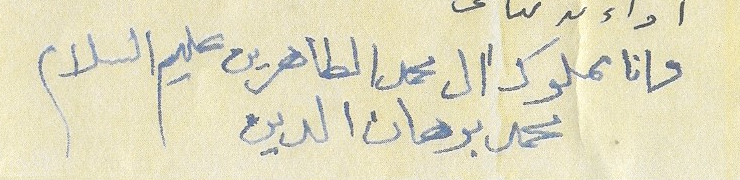
  • After Miyasaheb Shaikh Ibrahim al-Yamani finishes the transcript of the incident, he seeks Syedna Burhanuddin’s RA authorizing signature and attestation. In a different ink, with a different pen, Syedna Burhanuddin RA attests the document at the bottom with his signature.
Mamlook Aale Mohammed al Tahereen, Mohammed Burhanuddin

Mamlook Aale Mohammed al Tahereen AS, Mohammed Burhanuddin

  • Burhanuddin Moula RA, in his unparalleled attention to detail notices that one of the names of the witnesses is incomplete and completes it by adding the word ‘Abdulqadir’ at the end of his name with his own hand.

 What is even more telling of Syedna Burhanuddin’s RA great foresight and indicative of the taa’eed and ilhaam he receives from Imam al-Zaman is that in that year, prior to revealing the nass in the documented, verified incident above, Syedna RA composed a verse in his Sherullah munajaat shareefah in which he openly refers to his Shahzadah and Mansoos, Syedna Mufaddal Saifuddin TUS:

mufaddal duat

The meaning of this verse can be read in multiple ways. One version refers to Syedna Taher Saifuddin RA, the other to Syedna Mufaddal Saifuddin TUS. (Essentially they are both the same. In Syedna Taher Saifuddin’s RA famous verse, “Verily this fataa (young man) is anaa (me) and an inaa’, a vessel for the knowledge of guidance; a great vessel indeed.” In this verse, the Arabic word for ‘me’, anaa, has a numerical significance of 52 according to Abjad. The word for vessel, inaa’, equals 53. Syedna Taher Saifuddin RA draws parallels between himself and his grandson Syedna Mufaddal Saifuddin TUS, just as he had done with his son Syedna Burhanuddin RA.)

The munajaat bayt above can be understood as follows:

  1. Saif al-Huda (the sword of guidance) in his radiance is like the sun amongst the stars; amongst the Doat he is mufaddal (has been given honor and fadl).
  1. Saif al-Huda Mufaddal, amongst the Doat, in his radiance is like the sun amongst the stars.

As the FatemiDavat site repeatedly stresses (unfortunately, to illogical conclusions), the Dai’s every action and statement has great meaning. Here, the deliberate use of the word Mufaddal with Saif al-Hoda by Syedna Mohammed Burhanuddin RA is no doubt a reference to Syedna Mufadal Saifuddin. That the verse was composed in the same year that Moulana RA was to make his nass apparent is not mere coincidence, but Allah Ta’ala’s divine design and Syedna Burhanuddin’s RA erudition and hikmat.

The 1388H nass was revealed by Syedna Burhanuddin RA prior to embarking upon one of the most historical journeys ever undertaken by a Dai in the period of satr. In 1388H, Buhanuddin Moula RA performed his first Hajj after ascension to the throne of Dawat. After completing Hajj, Syedna Burhanuddin RA travelled to Syria, Misr (Egypt), Tunisia, Algeria and Libya. It was destined for Burhanuddin Moula RA to be the first satr na Dai to visit the Fatemi cities of North Africa. For such a historic journey, Moulana Burhanuddin RA kept his mansoos Syedna Mufaddal Saifuddin TUS by his side.

Syedna Burhanuddin’s RA diligence and foresight is further highlighted in the incident of 1415H. Moulana RA himself narrates the 1388H nass to Shaikh Ibrahim’s son, Shaikh Abdulhusain al-Yamani nearly 27 years later on the 20th of Jumaad al-Ulaa, 1415 H (24th October, 1994). Instead of just calling Shaikh Abdulhusain and revealing the nass to him, as he did with his father, he narrates the entire incident of 1388H again thereby corroborating its proceedings. Syedna Burhanuddin RA recounted to Shaikh Abdulhusain the event and individually named all those he had kept witness to the 1388H nass. He also revealed that Bhusahebah Amatullah Aisahebah QR was also privy to this great secret and had done an exemplary job in safekeeping her amaanat. Today, an eyewitness to this historical event, Shaikh Abdulhusain al-Yamani is in our midst and has repeatedly recounted the incident to numerous people.

In all their anticipation and preparation for the death of the Moula RA they claim to be their beloved father, the one whose grief Khuzaima is allegedly consumed by, the FatemiDavat.com cult did not anticipate this evidence of Moula’s RA nass on Syedna Mufaddal Saifuddin TUS. They built their case on various distortions of Dawat texts, fabricated historical incidents and futilely attempted to create doubt in the instances of nass that they were aware of carried out by Burhanuddin Moula RA, yet this unknown document has taken them by storm. Now they are posing irrelevant hypothetical questions and accusing Dawat of forgery in order to create doubt in the minds of their followers. That they are attempting to prove that this document of 1388H is false is the greatest evidence of their own falsehood, for they know that if it’s veracity is established then everything they have said will be proven to be a lie. They have no choice but to contest this document and by doing so they have dug their own grave. For as easy as it is to forge a document with today’s technology, that same technology with greater ease can prove it’s authenticity beyond any doubt.

I ask those who have accepted Khuzaima as their Dai to pause and reflect. When you realize that this document, and subsequently all the other instances of nass are true, are Haqq, how will you then reconcile your beliefs with this reality, this haqiqat? Can you imagine what other lies Khuzaima and his deceivers will concoct for you? What other elements of your faith are you willing to allow them to violate and distort in order to achieve their delusional and selfish goals? 

The document of the 1388H nass is genuine, as are all the other instances. Syedna Mohammed Burhanuddin RA has appointed Syedna Mufaddal Saifuddin TUS as his mansoos and the 53rd Dai.

Doubt cannot and will not undermine conviction…

Reason #33: Aqa Moula al-Hayy al-Muqaddas RA Na Ishaara About Khuzeima Qutbuddin

Khuzeima Qutbuddin and his children claim that:

“Aqamola RA performed Nass on him 50 years ago, in private, when he appointed him Mazoon on 17 Shaban 1385H, saying: “Maara pachhi bhai Dai chho,” and he instructed him not to reveal the nass until the appropriate time. “

Furthermore, they suggest,

“Syedna Khuzaima Qutbuddin was Syedna Mohammed Burhanuddin’s Mazoon until his wafat. No one can dispute this. Mazoon’s aala shaan is attested in Dawat kitaabo. Therefore, you must accept that what Syedi Mazoon Saheb is saying about Nass is the truth (and that what shehzadas are claiming counter to that is fabricated).” (please also note that this text says Syedi Mazoon Saheb in it as of Feburary 1st 2014. This site was published on January 17th hours after Aqa Moula al-Hayy al-Muqaddas’s demise yet the authors are still calling Khuzeima ‘Syedi Mazoon Saheb.’ This is just more proof that this website preparation preceded Aqa Moula al-Hayy al-Muqaddas’s RA passing and seems to have been compiled in anticipation of his demise. What Mumin would prepare such a site and make such claims unless they were preparing for the demise of Moula RA. This is not only heart-wrenching it is outright detestable).

However, more than the words of a Mazoon claiming that they are the next Da’i, on the contrary, it is more prudent and sound to rely on the words of Dai al-Satr himself. In fact, it is the utmost important duty of any Da’i to do Nass on his successor. For this fact everyone is in agreement. So if Khuzeima Qutbuddin and his children claim that we should believe him because he was the undisputed Mazoon for 50 years – shouldn’t we put more trust in the words of Syedna Mohammed Burhanuddin al-Hayy al-Muqaddas RA? Wouldn’t Aqa Moula TUS had given us an ishaara of some kind? Wouldn’t he have wanted to somehow ensure that mumineen follow his true successor? In fact,  traditionally throughout Da’wat’s history  Duaat Mutlaqeen RA have employed Nass Jali (open and public proclamation of Nass) along with Nass Khafi (hidden or nass done in private) in order to ensure that the Mansus was known to the majority. This is simple common sense. However, the meaning of Nass Khafi (hidden nass) does not just mean that it is done in private; rather, it also extends to ishaaras (gestures) that are given by the Da’i towards the shaan of his successor. These types of ishaaras, Nass Khafi, were conducted on Syedna Mufaddal Saifuddin TUS countless times and Mumineen are witness to them, not just in the last three years, but throughout the history of Aqa Moula Syedna Mohammed Burhanuddin al-Hayy al-Muqaddas’s zaman. We have discussed some on this site, such as Reason # 9, and we will discuss more in other entries. However, if the claimants, Khuzeima Qutbuddin and his children, suggest that he  (KQ) is the true successor of Syedna Mohammed Burhanuddin RA – than surely it is only logical that Aqa Moula RA gave some sort of ishaara towards this and their claims.  

However, it is clearly  evident that the ishaaras from bayaan mubaraks of Aqa Moula Syedna Mohammed Burhanuddin al-Hayy al-Muqaddas RA do not resonate with Khuzeima Qutbuddin and his children’s claims and that is why they have refrained using even one example from the Iqtebasaat Nuraniyya (excerpts from Ashara Mubaraka – the main event and congregation of Mumineen in the zamaan of Syedna Mohammed Burhanuddin RA) in their entire website as a source for anything, much less for Nass Khafi or ishaara towards Khuzeima Qutbuddin’s stature. It would make complete logical sense that in these gatherings, in which the largest flock of Mumineen Mukhliseen who gathered each year in growing numbers, Aqa Moula Syedna Mohammed Burhanuddin al-Hayy al-Muqaddas RA would have done some sort of ishaara about Khuzeima Qutbuddin if he was his true successor. Well, Aqa Moula RA did one ishaara in the bayan below. In Dubai Ashara 1425 H., referring to the tartīb in the zaman of the 41st Dai, Syedna Abdul Tayyeb Zakiuddin RA (see Reason # 23 below) Aqa Moula al-Hayy al-Muqaddas RA said,

al-Maula al-Ajal Shaikh Adam Safiyuddin was the eldest of them all. He was the Shehzada of Syedna AbdulTayyib Zakiuddin RA. He, this Shaikh Adam, was in the rutba of Mazoon – a very eminent (baland) Rutba. However, that every single Mazoon becomes a Da’i, that is not the case. He (Syedna Abde Ali Saifuddin RA) is the Dai al-Satr. 

Satr’s Dai has immense responsibility and must carry a heavy burden, one that no one is able to carry except with the power and might of Khuda (خدا ني حول انے قوة سي).

Therefore, Aqa Moula Syedna Mohammed Burhanuddin al-Hayy al-Muqaddas  RA first taught us not to compare the maqam of Da’i Satr with that of the Mazoon and secondly, Mazoon is not always the next Da’i. Although, their rutba is very ‘aala, it does not outrank that of the successor who is going to become Da’i. This was his clear ishaara towards us – العاقل تكفيه الاشارة – ‘a meaningful gesture is enough for an intellectual.’

The website of Khuzeima Qutbuddin, fatemidavat.com, does just the opposite. It is solely a claim of his less than humdrum fifty years of service as the Mazoon as proof of his successorship. Rather than believing his cherry-picked arguments – I would rather put my faith in the words of Aqa Moula Syedna Mohammed Burhanuddin RA – who is still speaking to us today. Therefore, the appendage – al-Hayy al-Muqaddas – echoes even more clearly in our ears.

Reason #32: In your 50 years

(From the author of the ‘Black & White’, post #18)

I know not the job responsibilities of a Dawat dignitary but both my heart and intellect dictate that the prime focus must be to bring Mumineen closer to their Dai and Moula.

I am a simple Mumin, one of many. We look back at the last 50 years and recollect who has affectionately brought us nearer to Syedna Mohammed Burhanuddin RA. Our collective life experiences attest to Syedna Mufaddal Saifuddin TUS bringing us closer to Moula. During all these times, these moments, these memories, where were you? This is what Syedna Saifuddin TUS, His Eminence (HE) did and continues to do for me. What did you do?

1.       When I was born, HE helped my parents get my name from Moula RA. You were busy giving your own.

2.       HE made my parents understand that Deeni Taaleem preceded secular education. You showed your children the opposite.

3.       HE addresses my children in his bayans. You are incomprehensible to them.

4.       HE captured their hearts. You were irrelevant to them.

5.       HE has taught them to recite Moula’s shahadat (of Imam Husain SA). You have not seemed to learn it yourself.

6.       HE was busy taking Moula’s mesaaq. Your allegiance was to yourself alone.

7.       HE was seen satiating the thirst of a Jamea student. You were thinking them gundao.

8.       HE struggled amidst the mountains of Yemen. You were busy making mountains out of molehills.

9.       HE shows me the Shari’at. You show me how to abuse it

10.   HE shows me business. You show me interest.

11.   HE took me to Moula’s RA hazrat. You were hardly there.

12.   HE blessed me with courage for Moula’s ziyafat. You were encouraging your own.

13.   HE facilitated deedar. You resonated inkaar.

14.   HE taught me participation in Moula’s Ashara Mubarakah. You advocated alienation.

15.   HE shows me Moula’s ability. You speak of his incapacity.

16.   HE ensures me Moula’s Faizul Mawaid. You were busy buying your support.

17.   HE opens ziyaarat. You closed it.

18.   HE tirelessly joins hearts. You fractured a community.

19.   HE walked in a throng of supplicants. You had to beckon them.

20.   HE smiled at us. You frowned.

In conclusion, HE brought me closer to Moula. You did not.

Reason #31: Misaaq is to Moula, not to Mazoon

Misaaq is to Moula, not to Mazoon

From their website:

The rutba is fully named Mazoon al-Mutlaq because of the high platform that it shares with the Dai al-Mutlaq. It is a rutba for which we give an oath of allegiance in the misaaq alongside the Dai.

 We are mumineen, true followers of Syedna Mohammad Burhanuddin, and true adherents to the misaaq, fulfilling our qasam of walayat to Dai Mazoon Mukasir

 The fitnat people claim that Burhanuddin Mola ye Qutbuddin Mola ne “reva dida”, keeping him Mazoon only in zahir/outwardly form. If this were true, how could Burhanuddin Mola continue to take Qutbuddin Mola’s name in the misaaq oath which is the basis of every mumin’s imaan?

The misaaq is indeed the fundamental pact by which a Mumin acquires salvation. However, that pact is solely between Moula and Mumin. As the misaaq text clearly states, “This misaaq is for the 21st Imam, Imam Tayyib and his Dai and Na’ib, Syedna Mohammed Burhanuddin/Syedna Mufaddal Saifuddin”. In the 900 years of Satr, no Dai has ever mentioned in misaaq that this misaaq is for the Dai, Mazoon and Mukasir.  When the rutbas and those who been placed in those rutbas by Dai al-Zaman, are read out during the misaaq, the word ‘Na’am’ does not mean that the one who is giving his misaaq is giving his misaaq to the rutbas. Rather, he or she is agreeing and accepting the actions and appointments of Dai al-Zaman and affirming that he has the sole authority to place whosoever he wishes in any position he wants. It is the ta’at and walayat of the Muftaraz ul-Ta’aat Dai that we are affirming our allegiance and loyalty to.

The misaaq is an oath of allegiance to Haq na Sahib – not to Mazoon or Mukasir. THIS IS A FACT – NOT A FABRICATION. What they are purporting is lies and falsehood, continuing to twist every fact, every bayaan, every zikr, every historical event to serve their sole purpose of justifying the claim of Khuzaima. It is blatantly obvious to those who have an iota of intelligence what they are doing.

Reason #30: Where is the Quality?

Having a majority is not in itself proof of Haqq. There is no disputing this position. However, for the leader of either a majority or a minority, the standing of his companions, the quality of his supporters, is a reflection upon himself. It could be said that, in part, the merit of your associates is comment on your own character and vision.

Hudaat Kiraam RA have always been surrounded by their noble disciples and followers, even if they were few in number.  History has noted that though Ameerul Muminen Moulana Ali SA had few devoted supporters of his cause after the demise of Rasoolullah SA, they were publicly known to be of righteous character and elevated status. They had served Rasoolullah SA with diligence and sacrifice, especially in the early battles of Islam. This is especially apparent in the time of Ameerul Mumineen’s khilafat when he received the support of most muhajereen and badreyeen (those who fought in the battle of Badr). On the other hand, his opponent from Banu Omaaya was surrounded by a contingent of Rasoolullah’s pardoned prisoners of war, the remainder of his opponent s from the battle of Ahzaab (Khandaq) and mercenaries. This very observation was made by Aqeel bin Moulana Abi Talib SA and annoyed the Omayyad no small measure when he visited his court in Syria.

“Aqeel laughed aloud in his court. When questioned about why he burst out laughing, Aqeel replied that when I witness the majlis of Ali, I see him surrounded by Muhajereen and Ansaar. Whereas I see this court filled only by freed prisoners of war and the remnants of Rasoolullah’s opponents”

Over the course of Dawat in Satr, each Dai Mutlaq has been endowed by, at the least, a few notablehudood kiraam (dignitaries of Dawat). They served their Dai and Mumineen with distinction and excelled in the acquisition and dissemination of Ilm Aale Mohammed SA. Following their example, individuals in different strata of Mumineen also performed exemplary service.

There has been a vast spectrum of learned hudood over the course of the last half century. Who amongst them has supported Khuzaima in his claim? Yes, Haqq is not ascertained by numbers but one cannot help but question that who amongst the learned in all the various institutions of Dawat has acknowledged his leadership. It seems strange that ALL such learned men and women knowingly submitted to or supported Baatil according to Khuzaima’s claims. Who are his notable dignitaries of standing? The majlisof Dai al-Zaman Syedna Mufaddal Saifuddin TUS bears witness to Hudood Kiraam, Qasr Aali, Bayte Zainee, Kothar Mubarak, Asateza, Ummaal, Moallemeeen, Mazaaraat Khidmat guzars, talabat of Jamea and learned and perceptive Mumineen Mukhliseen. According to Khuzaima, they all have failed in identifying Haqq. In discrediting all these groups, he is claiming that the efforts of Syedna Taher Saifuddin RA and Syedna Mohammed Burhanuddin RA were wasted. They tirelessly cultivated these Dawat resources even though all of them would eventually follow the path of falsehood? Repeated testimonies from the Imami takht regarding their khidmat amount to nothing? Today, not even one Dawat khidmat guzar is named in his retinue. Even those that were gradually left him one by one. I wonder why this so.

Syedna Mufaddal Saifuddins majlis where Dawat Hudood from Syedi Mukasir Saheb are seated; those who have directly seeked ilm e aale Mohammed from Syedna Taher Saifuddin RA and Syedna Mohammed Burhanuddin RA.

Syedna Mufaddals majlis

Syedna Mufaddals majlis

Khuzaimas majlis “hudood” comprises of 3 of his own children, whom didn’t have the good fortune to be born in Syedna Taher Saifuddins RA era, nor had the tawfeeq to attend Syedna Mohammed Burhanuddins RA waaz regularly, nor attended Al Jamea tus Saifiyah.

KQs Majlis

Khuzaimas Saqeefah

Yes, one is definitely left perplexed. If quantity is not a measure of Haqq, what of quality?

# 29: Regarding the Photograph With Syedna Taher Saifuddin RA.

On his website, Khuzeima Qutbuddin has alleged that a photograph taken with him, Syedna Mohammed Burhanuddin al-Hayy al-Muqaddas RA, and Syedna Taher Saifuddin RA is proof of his alleged nass considering that Syedna Taher Saifuddin RA waited 10 minutes to find him and bring him for the picture. He and his children write,

“This picture was not a coincidence. Syedna Taher Saifuddin summoned Syedna Qutbuddin and waited for ten minutes. He could have also summoned any other, or all, of the brothers in Surat. He did not A picture is worth a thousand words.”

Again, interpreting a sharaf as an indication of nass is an interesting argument. In response please view this video.

« Older Entries Recent Entries »